

A cathedral ceiling is one of the most striking, sought-after architectural features you can have in a home. But this feature demands a completely different approach to lighting. Without the right fixtures and placement, the scale of the space can feel unfinished or unevenly lit.
In this cathedral ceiling lighting guide, we’ll cover how to light vaulted and cathedral ceilings using chandeliers, pendants, and recessed lighting. We’ll dive into all the details you need, including sizing, installation, and layout considerations that can help you build a balanced, beautifully layered lighting plan.
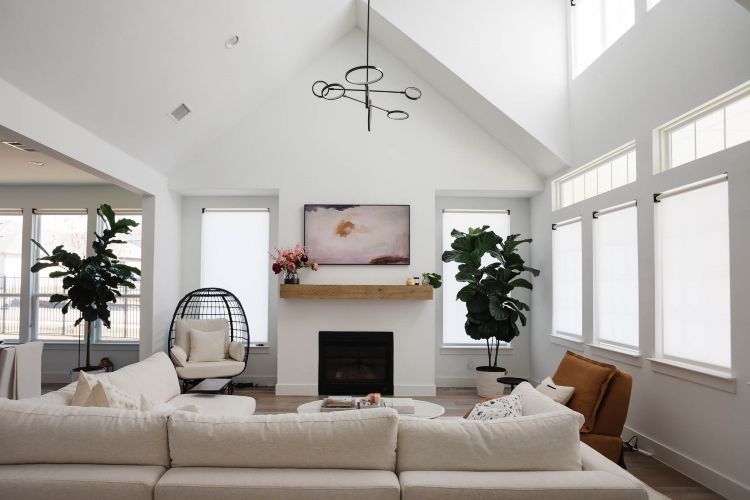
Cathedral ceiling lighting is the approach used to illuminate tall, angled ceilings that extend well above standard room height. These spaces differ from flat or low ceilings because they introduce more vertical space, slope, and openness, all of which impact how light is distributed throughout the room. Cathedral ceilings feature two matching sloped sides that meet at a central peak, while vaulted ceilings typically follow a single sloped or asymmetrical rise, which changes how light is distributed across the space.
The main challenge with cathedral ceilings is achieving balanced illumination across a larger space. Light has to travel farther, angles can affect coverage, and standard fixtures can feel undersized or visually disconnected. Because of this, fixture scale matters. Larger designs or longer drop lengths (or a combination of both) are often necessary to maintain proportion within the room. It’s also important to consider how lighting performs across angled surfaces. Cathedral ceilings often require fixtures designed for sloped installation. Thoughtful placement is the key to avoiding uneven brightness or isolated shadows.
Since the ceiling structure directly influences both fixture selection and layout, careful planning counts. Understanding these factors is the foundation of all the best cathedral ceiling lighting ideas, especially when you combine different fixture types to achieve function and visual balance.
Chandeliers, pendant lights, and recessed lighting are the most effective choices for cathedral ceilings, and they each contribute a different layer to the overall lighting plan. These spaces tend to require more than one fixture type due to their height and angled structure, which can make single-source lighting feel incomplete. Because of the ceiling angle and scale, fixture compatibility and fixture placement become especially important. Cathedral ceilings benefit from layered lighting where fixtures work together to provide coverage and visual balance. Chandeliers often serve as focal points, pendants help define specific areas, and recessed lighting supports overall ambient illumination.
A chandelier is a hanging light fixture that typically features multiple arms, tiers, or decorative elements to combine illumination with visual impact. Chandeliers are best used in cathedral ceiling spaces when you want a strong central focal point to visually anchor the height of the room. Because these ceilings create significant vertical volume, oversized or multi-tier chandeliers can help fill that space in a way smaller fixtures simply can’t. Chandeliers are especially effective in living rooms, entryways, and dining rooms where the fixture can act as both a lighting source and a design centerpiece. With designs that range from ornate, decorative styles to clean, minimalist fixtures, they work across both traditional and modern interiors.
Using a cathedral ceiling chandelier comes down to ceiling height and layout. Taller or more open spaces benefit from large, visually substantial fixtures. In oversized rooms or open-concept layouts, multiple chandeliers may be used to maintain balance across the space rather than relying on a single fixture. The scale of a chandelier should always correspond to both ceiling height and room proportions, with large chandeliers, multi-tier, or elongated designs often working better in taller spaces.
Proper hanging height also matters, as the fixture needs to feel connected to the space below while still taking advantage of the vertical scale. Chandeliers require proper ceiling support due to their weight, so secure installation is an important consideration. A well-chosen chandelier enhances the architectural presence of a cathedral ceiling while reinforcing the overall design style of the room. That’s why choosing the perfect chandelier is just as much about proportion and placement as it is about style.
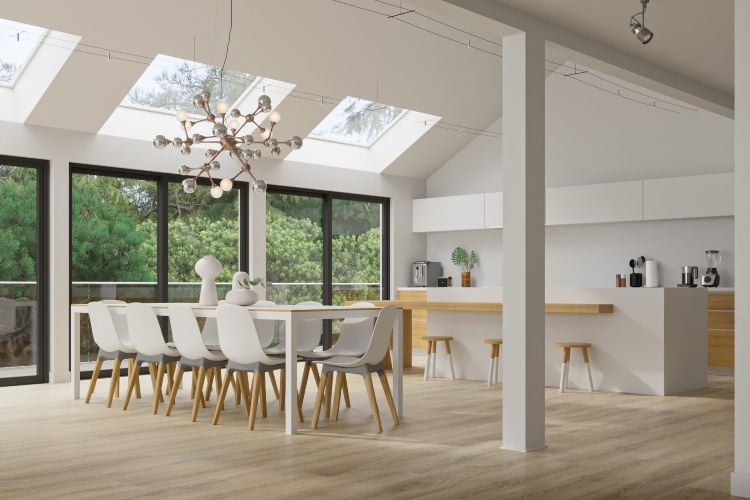
Pendants are single hanging fixtures suspended from the ceiling by a chain, cord, or rod to direct light downward. Pendant lights are a strong option for vaulted ceilings, particularly when lighting is needed over defined areas such as dining tables, kitchen islands, loft areas, or open spaces. When you adjust drop height with a cord or rod, you get a tailored look that’s well-suited for angled ceilings or varying ceiling heights where placement needs to feel visually connected to the space below.
Because they excel at defining zones, pendants work well in layouts where focused lighting is needed within an open area. In smaller areas, a single pendant may be sufficient. In large or spacious areas, multiple pendants are often used in clusters or linear arrangements to create visual balance and improve coverage. This approach works especially well in open-concept layouts, where lighting can help separate functional areas without physical barriers. Whether the space leans more modern or transitional, pendants can be used to enhance the overall design while still supporting your practical lighting needs. Spacing and proportion are key, as pendants should feel evenly distributed, but not overcrowded. When scaled correctly, pendant lighting promises functionality and a strong visual design element in rooms with vaulted ceilings.
Recessed lighting is installed directly into the ceiling for a flush, built-in look that provides ambient illumination without visual bulk. When paired with sloped ceiling-compatible housings and proper, well-planned spacing for even coverage, recessed lights can be the perfect solution for cathedral ceilings. These fixtures are most effective in layouts where ambient lighting is needed, but large or dominant features aren’t ideal, especially in open spaces or rooms with high ceilings. Its low-profile design complements modern and contemporary designs, but recessed lighting can also serve as a neutral backdrop for more ornate fixtures in the most traditional spaces.
Because of the unique height and slope of a cathedral ceiling, spacing plays an important role in ensuring even light distribution throughout the space. In taller ceilings, lights often need to be spaced farther apart. It’s also important to avoid placing recessed lights too high without a purpose, as this can reduce their effectiveness and leave shadows. Adjustable trims or gimbals are often used to prevent uneven coverage and direct light more accurately across the angled plane. Recessed lighting works best when it’s used as a supporting layer alongside larger fixtures, such as chandeliers or pendants. With strategic planning, the right fixtures, and a thoughtfully layered approach, you can easily maintain overall brightness while highlighting the architectural charm of the ceiling.
When lighting a cathedral ceiling, it’s important to account for both the height of the ceiling and the amount of open space overhead. As ceilings get taller, fixtures should increase in width and vertical presence so they don’t feel disproportionate or visually disconnected from the space below.
For proper sizing:

The ideal hanging height for a fixture on a cathedral ceiling depends on the slope of the ceiling and the room’s function. The key is to make the fixture feel visually connected to the space below, but not floating too high or disrupting sightlines. This visual connection means the fixture should feel anchored to the furniture or activity zone beneath it, not detached far above the room. For example, in dining rooms, chandeliers are typically centered over the table. In open living spaces, they should relate to seating height, furniture, and overall proportions.
Hanging height should be adjusted based on the function of the room. Dining rooms typically require a lower, more centered placement compared to open living areas, which prioritize sightlines and movement. With features like adjustable cords and downrods, it’s easy to position a fixture at the right height. As a general guide, higher ceilings call for longer drops to maintain proportional scale and prevent fixtures from feeling distant or undersized.
Sloped ceiling adapters allow fixtures to hang correctly by keeping them level rather than tilted. They’re commonly required when chandeliers or pendants are installed on vaulted or cathedral ceilings where standard mounting hardware won’t provide adequate leveling. In most cases, sloped ceiling fixtures will either include a compatible adapter or you’ll need to purchase one separately, depending on the design. Using the correct hardware is important for alignment and safe installation.
Vaulted ceiling lighting works best when no one fixture is forced to do all the work. A central chandelier or pendant can serve as a focal point and anchor, while recessed lighting fills in ambient brightness to keep the room evenly and adequately illuminated. Accent lighting can be incorporated to highlight beams, architectural features, or ceiling lines that would otherwise become shadowed. In living rooms, this often means a central fixture paired with recessed perimeter lighting. In kitchens or open layouts, pendants can be used to define specific zones with recessed fixtures providing consistent illumination. The goal is to distribute light across the room’s height and width for visual balance at every level.
Cathedral ceiling lighting should work with the architecture, not compete with it. Because of the vertical scale, large or more detailed fixtures tend to perform best, as they fill the space without feeling undersized. Your style choice should align with the rest of the interior design, whether your space is modern, rustic, or traditional. Materials like metal, wood, or glass can reinforce that style direction, and coordinating finishes across fixtures helps maintain a cohesive look.
In open-concept spaces where multiple fixtures are visible at once, consistency is particularly important. For an impactful and intriguing look, choose bold, dramatic chandeliers. For minimalist spaces, opt for understated recessed lights. Whether you incorporate modern chandeliers, pendants, recessed lighting, or a combination of all three, the goal is a layered lighting plan that feels cohesive, well-scaled, and thoughtfully integrated into the architecture of the space.
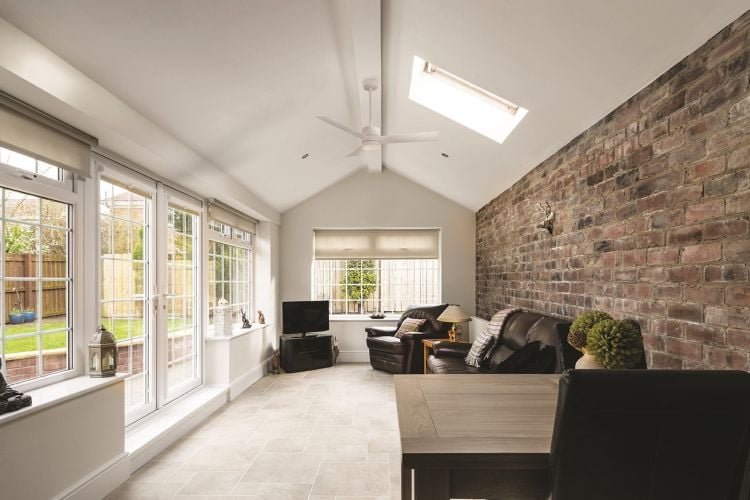
Creating a cohesive cathedral lighting plan starts with a layered approach. First, identify the scale of the room and choose a central fixture that fits the ceiling height. From there, layer in recessed lighting to provide consistent ambient brightness and use accent or pendant lighting to define seating zones, dining spaces, architectural features, or other key areas.
After establishing layering and layout, focus on alignment and consistency. Fixtures should feel proportionate to the vertical space, visually connected to the areas below, and coordinated in style for an intentional feel. Sloped ceiling compatibility and proper hanging hardware should also be considered early in the process to ensure proper placement and installation.
With the right combination of scale, placement, and fixture type, cathedral ceiling lighting becomes a functional and visually cohesive addition to the room. To explore options designed with tall and angled ceilings in mind, browse by fixture type to build a tailored, layered lighting solution for your space. Shop chandeliers and other lighting options at Lightopia and find a curated selection of fixtures to bring your design together.
Yes, chandeliers can be installed on sloped ceilings. They require a sloped ceiling adapter or hardware that allows the fixture to hang level. This allows for proper alignment, safe installation, and visual balance in angled ceiling spaces. Always confirm manufacturer compatibility to make sure the fixture will have the proper amount of support for its weight.
Vaulted ceilings can be effectively lit using options like recessed lighting, track lighting, or multiple pendants. Recessed lights provide even ambient coverage, track lighting adds directional flexibility, and pendant clusters bring visual interest while defining zones within open layouts. For the best combination of balance and coverage, take a layered approach that combines multiple lighting types.
The best lighting option for high ceilings combines large-scale statement fixtures like oversized chandeliers with supporting ambient lighting, such as recessed fixtures. This layered approach ensures both visual impact and even illumination throughout the space. Proper scale is essential because it prevents fixtures from appearing undersized, while balanced layering maintains function across even the most spacious areas.

THANK YOU!
Your discount code is on its way.
If you don't receive your promo code, please check your email junk or spam folder and click on "Not spam".
Free Shipping
Free standard shipping on all orders within the contiguous USA.
Orders to Canada, Alaska, Hawaii and Puerto Rico will incur additional shipping and handling fees, which will be calculated and presented at checkout. Canadian customers will be charged for all applicable customs duties, taxes, and brokerage fees.
For large, oversize items that require a surcharge above our shipping and freight partners’ standard shipping rates, an Oversize Processing Fee will be calculated in cart.