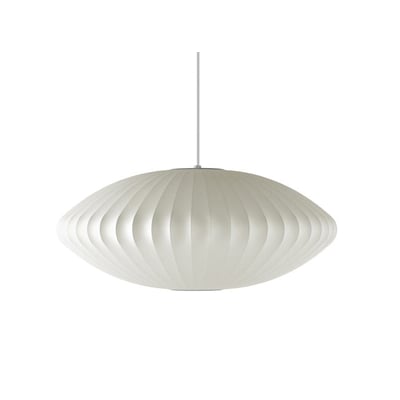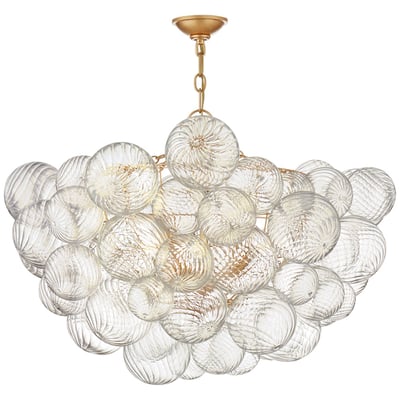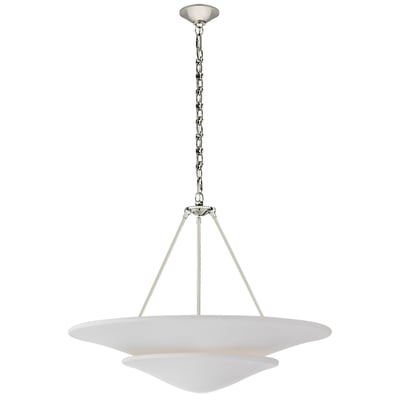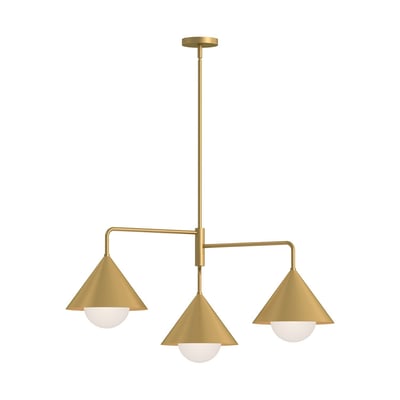

Exposed wood beams bring warmth, character, and a sense of history to a space. These architectural features immediately draw the eye and elevate the design of any room, from rustic farmhouses to modern lofts. While beams make a statement, they can also present some unique challenges for lighting. Fixtures that clash with beam placement or fail to account for spacing can disrupt the visual flow and leave your room dim in unexpected spots.
Exposed beam ceiling lighting requires thoughtful planning to highlight these coveted features without compromising functionality. The right fixtures can emphasize the texture and depth of wood beams, leaving you with a room that feels intentional, balanced, and inviting. Below, we’ll explore how to approach lighting in rooms with exposed beams, from layout considerations to fixture selection, and show how modern farmhouse lighting and rustic lighting options can beautifully complement this charming architectural detail.
Before making any fixture selections, it’s important to study your unique beam layout. Beams dictate where lights can hang, where shadows will fall, and how wiring can be routed. A ceiling with widely spaced beams may feel empty without the right pendant or chandelier placement, while beams that sit close together can make lighting installation more restrictive.
Key considerations for working with beam ceilings include:
Understanding the constraints and opportunities of your beam layout is the first step in designing lighting that enhances both the room and the beams themselves.
Once you’ve assessed the structure of the ceiling, it’s time to consider the type of fixtures that complement beams. The goal is to emphasize the architectural beauty without competing with it, while also providing functional illumination for the space below. Different fixture types create distinct effects, and some are particularly suited for certain room styles. Chandeliers, pendants, recessed lighting, and track lighting can each highlight your beams while maintaining practical illumination. However, they achieve the goal in very different ways.

Chandeliers make a dramatic statement, especially in rooms with high ceilings or long distances between beams. Hanging a chandelier between two beams allows the fixture to anchor the space visually, drawing the eye upward while filling in open areas with light.
Practical tips for this layout:
If you’re looking to incorporate a bold design element while also achieving practical, efficient lighting, look no farther than a chandelier.
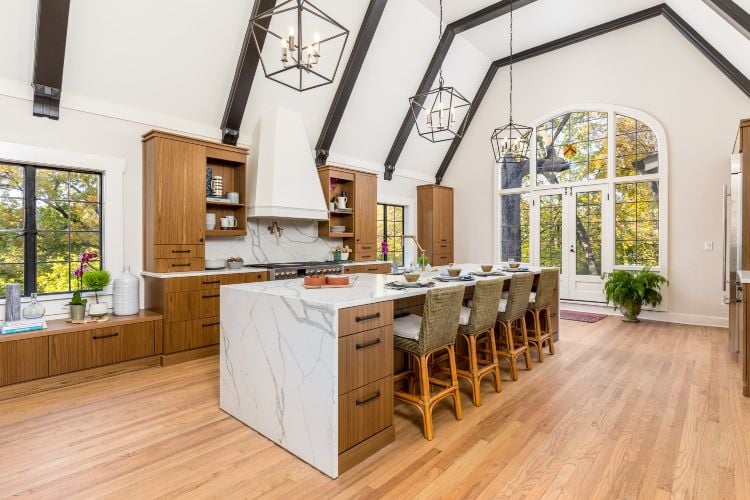
Pendant lighting is versatile and can be used to define zones, provide task lighting, or enhance architectural interest. When beams are present, pendants can be suspended directly beneath a beam or hung from a chain to position them between beams.
Best practices for pendant installation:
Using pendants in combination with beams draws attention to both elements for a layered, dimensional lighting plan that also feels cohesive.
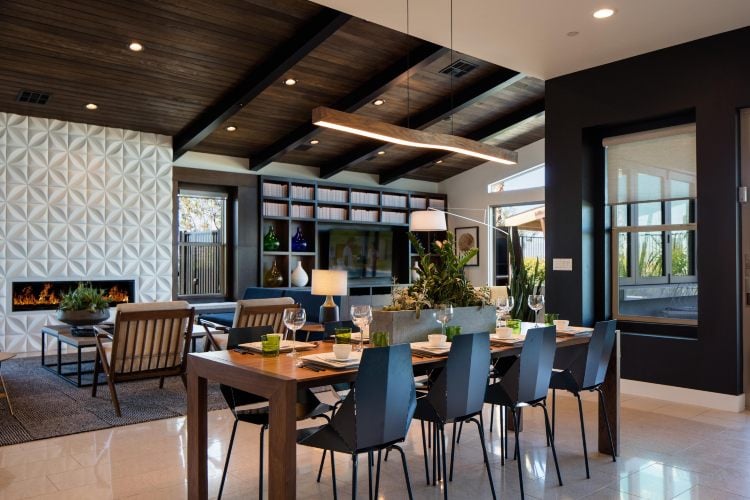
Recessed lighting offers a more subtle approach for beam ceilings. These fixtures are installed flush with the ceiling, often between beams, for even ambient light that doesn’t disrupt the architectural lines.
Considerations for recessed lighting:
Recessed lighting works especially well in spaces where beams are the star of the ceiling because it allows the wood to remain prominent while still providing functional illumination.

Track lighting offers maximum flexibility for beam ceilings. Fixtures can be positioned along the track to highlight architectural details, illuminate artwork, or provide task lighting wherever it’s needed most.
Key points for track lighting:
Track lighting is ideal in multipurpose rooms or spaces where lighting needs may change over time, as it provides an adaptable solution without the need for additional wiring.
Vaulted beam ceilings introduce new challenges: height and angle. Factors like scaling fixture size, adjusting chain length, and accommodating angled canopies are critical to achieving the right balance of aesthetics and functionality.
With proper planning, vaulted beam ceilings can create a visually striking accent while also maintaining adequate illumination throughout the space.
Even when your home features the most beautiful beams, lighting missteps can compromise the style and function of the space.
Common mistakes include:
Avoiding these pitfalls allows your beam ceilings to shine, literally and visually, as you enjoy comfortable, functional illumination every day.
If you’re ready to enhance your exposed beams, explore the curated ceiling lighting collection at Lightopia. With options designed for everything from rustic to modern lighting and far beyond, you can find fixtures that highlight architectural features while delivering functional light. With thoughtful placement and style coordination, your beam ceiling will remain a signature element of your home’s one-of-a-kind design.
Yes, recessed lights can be installed between beams, as long as the depth allows for proper housing. In shallower beams, surface-mounted or track lighting may be a better alternative. Proper placement ensures even ambient lighting but doesn’t interfere with the visual lines of the beams.
In most cases, centering fixtures between beams creates symmetry and balance. This approach helps distribute light evenly across the room and draws attention to the architectural feature itself. However, placement can also be adjusted to highlight specific functional areas, such as dining areas or seating nooks.

THANK YOU!
Your discount code is on its way.
If you don't receive your promo code, please check your email junk or spam folder and click on "Not spam".
Free Shipping
Free standard shipping on all orders within the contiguous USA.
Orders to Canada, Alaska, Hawaii and Puerto Rico will incur additional shipping and handling fees, which will be calculated and presented at checkout. Canadian customers will be charged for all applicable customs duties, taxes, and brokerage fees.
For large, oversize items that require a surcharge above our shipping and freight partners’ standard shipping rates, an Oversize Processing Fee will be calculated in cart.