

Even the most thoughtfully designed living rooms can feel unfinished when the corners are dark or unused. Corner lighting is one of the easiest ways to solve that problem. Floor lamps, wall sconces, table lamps, and accent fixtures can balance the room while adding depth and function to overlooked areas. These fixtures also play an important role in layered lighting design. In this living room corner lighting guide, we will explore practical ideas and show you how to choose the right fixtures based on layout, size, and function. With a little planning, every corner can feel intentional rather than empty.

Corner lighting helps complete a room’s lighting plan by brightening areas that overhead fixtures often miss. Instead of relying on one main light source, corner fixtures add extra layers that spread brightness more evenly across the space. They also help fill areas that might otherwise feel disconnected from the rest of the room. This softens the contrast between bright and dim spots and makes the living room feel more balanced.
A corner can also do more than provide light. Depending on the fixture, it can become a reading spot, a decorative accent, or a softer source of atmosphere. Corner lighting works alongside ambient, task, and accent lighting to reduce dark areas and make every part of the room feel useful.
The best corner lighting depends on how you want the space to look and function. Common options for living room lighting include floor lamps, table lamps, wall sconces, and accent lighting. Each one brings a different mix of brightness, style, and flexibility to the room.
A floor lamp can add height and make a corner feel more complete. A table lamp can bring a warm glow to a side table or console. Wall sconces save space and add light at eye level. Accent lights can highlight artwork, shelves, or architectural details. Instead of choosing one solution for every corner, match the fixture to the purpose of the space.
Floor lamps are freestanding fixtures, so they do not require installation. This makes them one of the most flexible options for corner lighting. They work especially well beside sofas, armchairs, and reading nooks where you need both ambient and task lighting. Their height also draws the eye upward, which helps an empty corner feel more finished.
Different floor lamp styles serve different needs. Arc lamps can extend light over a seating area. Torchiere lamps direct light upward for soft ambient brightness. Sculptural floor lamps can act as a focal point and add visual interest.
Place a floor lamp near furniture so it feels useful and proportional. For example, a lamp beside a chair can create a comfortable reading spot. Keeping the lamp slightly out from the corner can also prevent the area from feeling crowded. Because floor lamps work in both small and large living rooms, they are easy to move as your layout changes.

Table lamps work well for corners that already include furniture, such as a side table, console, or cabinet. They provide localized light with a softer glow than many floor lamps. This makes them a good choice when you want warmth and atmosphere instead of strong task lighting.
Adding table lamps is especially useful in traditional and transitional living rooms, where shades, finishes, and materials can complement the surrounding furniture. Place one beside a chair to create a cozy reading spot, or use one on a console to add a soft layer of light. When the size and placement feel balanced, the corner looks planned rather than filled as an afterthought.
Table lamps also pair well with other lighting layers. They can soften a room without overpowering the space or taking up floor area.
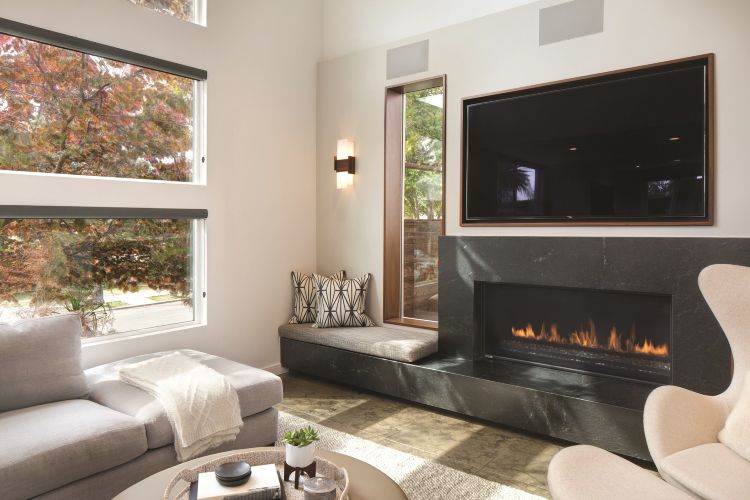
Wall sconces provide light at eye level and save floor and table space. This makes them a smart choice for smaller living rooms or tight corners where a lamp would feel crowded. Since sconces mount to the wall, they create a more permanent lighting solution that can add both function and style.
Use sconces to highlight artwork, frame a corner, or bring attention to architectural details. You can also place them near seating to support reading or relaxing. Mounting height matters. In many rooms, wall sconces work best around 60 to 66 inches from the floor, where they align with sightlines and help reduce glare. By adding light at the middle of the room, sconces help the overall lighting plan feel more complete.
Pendants and other ceiling-mounted fixtures can work in living room corners when you need more depth or definition. This approach works best in rooms with higher ceilings, where the fixture has enough space to hang comfortably. In larger living rooms, a pendant can help define a corner seating area or reading zone.
Because pendants draw attention upward, they can also turn an overlooked corner into a subtle focal point. Scale and placement are important. Choose a fixture that fits the size of the room and aligns with the surrounding layout. When used thoughtfully, pendant lighting adds an overhead layer, creates vertical interest, and complements the other fixtures in the space.
Choose corner lighting based on how you plan to use the space. A reading corner needs different light than a decorative corner or an empty area you simply want to brighten. Start by looking at the corner’s purpose, the available space, and how it fits into the room’s overall lighting plan.
Larger rooms may support more than one fixture type, while smaller corners usually need compact, space-saving options. Scale also matters. A fixture should feel proportional to the room and nearby furniture. The right lighting should blend into the living room naturally rather than feeling too large, too small, or out of place.
Small corners benefit from space-saving fixtures that provide light without adding visual bulk.
This approach keeps the corner functional while also maintaining a clean, open feel.
Corners without natural light need more than one source of illumination. This helps the space feel lighter and less closed in.
With the right mix of fixtures, a dark corner can feel connected to the rest of the living room instead of visually separate.
Fixture design plays a major role in how a living room feels. Corner lighting should match the style of the room, not compete with it. Each design style benefits from a different approach.
| Design Style | Best Lighting Solutions | Effect |
|---|---|---|
| Modern | Slim floor lamps, minimal sconces | Clean, streamlined glow |
| Traditional | Table lamps, warm wall sconces | Soft, layered warmth |
| Eclectic | Statement floor lamps, bold accents | Personality and contrast |
| Minimalist | Simple floor lamps, recessed lighting | Quiet, unobtrusive lighting |
Whether you opt for modern floor lamps or classic table lamps, the goal remains the same: choose lighting that feels intentional, balanced, and consistent with the rest of the space. Selecting fixtures that align with your design style allows the corner to enhance the room rather than competing with it.
Layering lighting in a living room means building a balanced mix of light sources so the entire space feels evenly illuminated.
When combined effectively, these layers create a room that feels cohesive, functional, and visually complete from corner to corner.
Incorporating corner lighting into a space starts with choosing fixtures that match the function of the space and the overall lighting plan. Floor lamps, table lamps, wall sconces, and accent lighting all play different roles, and combining them thoughtfully helps create a balanced and complete living room. The most effective approach is to think of layers and scale so each corner feels intentional rather than separate from the rest of the room.
To explore solutions for every type of corner and layout, browse by fixture type to find the right fit for your space. Shop living room lighting fixtures at Lightopia to discover options that help you build a layered, cohesive design throughout every inch of the room.
Floor lamps are a versatile solution for living room corners because they provide both ambient and task lighting without requiring installation. They work well in most layouts, allow for elevated style without sacrificing functionality, and can be easily repositioned as needed. Depending on the style, a floor lamp can also act as a focal point while supporting a broader layered lighting plan.
To brighten a corner, use more than one light source to reduce shadows and improve overall coverage. Combining ambient and accent lighting helps distribute light evenly throughout the space, while reflective elements like mirrors can help bounce light throughout the space. Avoid relying on a single fixture, which can leave areas feeling unevenly or inadequately lit. Instead, opt for warm, diffused light and a layered approach.
Yes, corner lighting can enhance both the function and the appearance of a room by adding depth, balance, and visual interest. It helps eliminate dark areas, highlights key features, adds dimension to the room, and creates a more cohesive layout. When done well, efficient corner lighting turns underused areas into intentional parts of the overall design of the space.
THANK YOU!
Your discount code is on its way.
If you don't receive your promo code, please check your email junk or spam folder and click on "Not spam".
Free Shipping
Free standard shipping on all orders within the contiguous USA.
Orders to Canada, Alaska, Hawaii and Puerto Rico will incur additional shipping and handling fees, which will be calculated and presented at checkout. Canadian customers will be charged for all applicable customs duties, taxes, and brokerage fees.
For large, oversize items that require a surcharge above our shipping and freight partners’ standard shipping rates, an Oversize Processing Fee will be calculated in cart.