

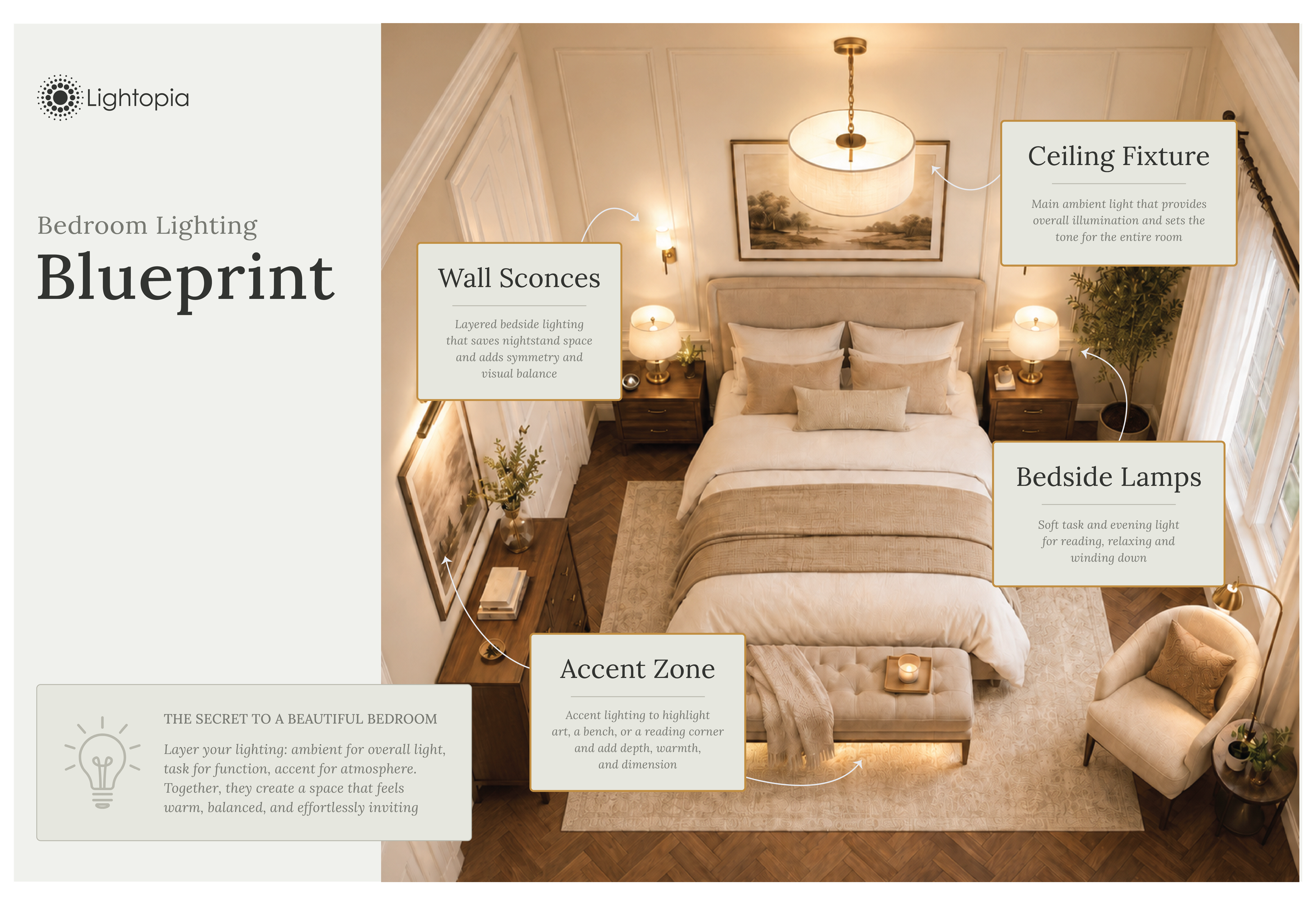
Bedroom lighting has one overarching goal: it should make you feel calm. The bedroom is the room where harsh overhead lighting causes the most damage, and where thoughtful layering creates the most dramatic improvement.
Unlike kitchens and bathrooms, bedrooms rarely need intense task lighting. What they need is warm, dimmable, multi-source illumination that adjusts gracefully from getting-ready brightness to quiet-evening softness.
Bedroom ceiling fixtures don’t need to do heavy lifting, they’re rarely running at full brightness. This makes the bedroom a great place to invest in a beautiful design fixture that works as much as an art piece as a light source.
Bedside lighting is the most personal fixture decision in your home. The right choice depends on your nightstand setup, reading habits, and aesthetic preferences.
| Bedside Option | Best For | Key Consideration |
|---|---|---|
| Table lamp (pair) | Traditional beds with matching nightstands | Choose shade that directs light without glare on partner |
| Wall sconce (hardwired) | Minimal nightstand, clean wall look | Requires electrical work; position at reading eye level |
| Plug-in sconce with cord | Sconce look without electrical work | Use a cord cover for a clean finished appearance |
| Pendant bedside light | Modern, design-forward bedrooms | Hang at 20–24" above mattress surface for proper height |
| Swing-arm task lamp | Dedicated readers, adjustable direction | Look for dimmable models with warm bulb options |

The bedroom is where color temperature matters most. The wrong bulb undermines everything else.
If you have smart bulbs, set a warm-to-dim evening mode that automatically shifts to 2200K before bedtime, this supports natural melatonin production and sleep quality.
| Mistake | Why It Hurts | The Fix |
|---|---|---|
| Using cool-tone bulbs | Feels stimulating, not restful | Stay at 2700K–3000K throughout |
| Single overhead fixture only | Flat, clinical feel with no warmth | Add bedside lamps or sconces for layered light |
| No dimmers | Can’t adjust for mood or time of day | Put every circuit on a dimmer switch |
| Fixtures too bright | Sleep-disrupting intensity at night | Use dimmable 800–1,000 lumen max per fixture |
| Mismatched bedside lamps | Visual imbalance, one side over-lit | Use matching pairs or symmetric sconces |
The best bedroom lighting combines a warm, dimmable overhead fixture for general use with layered bedside lighting, either table lamps or wall sconces, for reading and evening comfort. Use 2700K bulbs throughout and put every circuit on a dimmer. Avoid cool-toned bulbs, which are too stimulating for a sleep environment.
Use 2700K for the warmest, most relaxing residential feel, ideal for primary and guest bedrooms. 3000K is acceptable if you have a bright getting-ready routine, but try not to exceed this range. Avoid anything above 3500K in bedrooms, as the cooler light is too stimulating and undermines restful evenings.
A well-lit bedroom needs at minimum three sources: one overhead ambient fixture, two bedside lights (one per side of the bed), and ideally one accent source such as a sconce or decorative lamp. This creates the layered flexibility to move from getting-ready brightness down to soft evening ambiance.
Yes, every bedroom light circuit benefits from a dimmer. Dimmers allow you to move from full brightness for getting dressed down to a gentle 10–20% glow for winding down. Use LED-compatible dimmers and make sure your bulbs are labeled dimmable to avoid flickering or buzzing.

THANK YOU!
Your discount code is on its way.
If you don't receive your promo code, please check your email junk or spam folder and click on "Not spam".
Free Shipping
Free standard shipping on all orders within the contiguous USA.
Orders to Canada, Alaska, Hawaii and Puerto Rico will incur additional shipping and handling fees, which will be calculated and presented at checkout. Canadian customers will be charged for all applicable customs duties, taxes, and brokerage fees.
For large, oversize items that require a surcharge above our shipping and freight partners’ standard shipping rates, an Oversize Processing Fee will be calculated in cart.