

Vanity lighting is one of those details that can completely change how a bathroom looks and functions, yet it’s often treated as an afterthought during a remodel. It’s also one of the first things you notice when it’s done right (or wrong). Poor illumination can create shadows, distort color, and make everyday routines more frustrating than they need to be. The right lighting design makes everything from getting ready in the morning to winding down at night feel easier and more natural.
What makes vanity lighting especially important is that it sits at the intersection of design and daily use. It needs to look good within the space. More importantly, it needs to work in a way that supports real-life tasks. In this vanity lighting guide, we’ll give you insight into how different fixtures perform, where they should be placed, and how factors like color temperature and CRI affect the way you see yourself in the mirror.
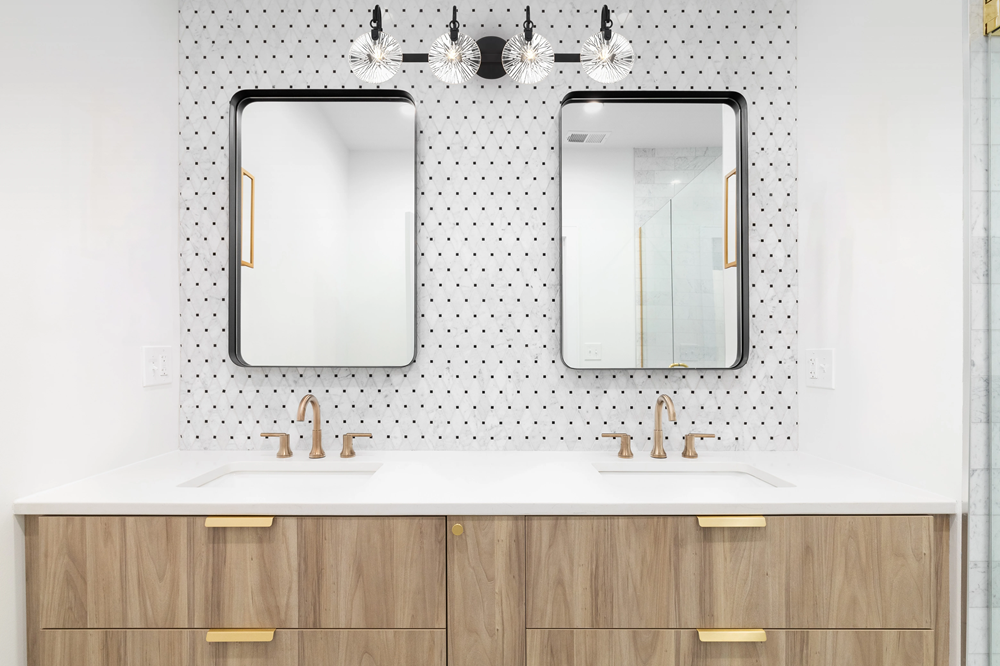
Vanity lighting does more than illuminate a mirror. It creates the right conditions for tasks that rely on clarity and accuracy. Activities like applying makeup, shaving, or styling your hair all depend on even, shadow-free lighting. When the lighting isn’t positioned correctly, it can cast shadows across the face. That makes it harder to see details and leads to uneven results.
One of the most common issues comes from relying too heavily on overhead lighting. While ceiling fixtures can provide general illumination, they often direct light downward in a way that creates shadows under the eyes, nose, and chin. This type of lighting can make grooming tasks more difficult and less precise, especially when you’re trying to match colors or achieve clean lines.
A well-designed vanity lighting setup takes a layered approach. It combines ambient lighting from above with more targeted lighting around the mirror to create balanced, even illumination. This thoughtful layering technique reduces harsh contrasts. It also helps your reflection appear more natural. When done right, vanity lighting supports function, enhances comfort, and makes everyday routines feel smoother and more intuitive.
Choosing the right vanity lighting starts with understanding the different fixture types. The right option depends on your space, your layout, and the kind of lighting effect you want to achieve.
Each of these options balances practicality and style. The key is to choose a fixture type that complements the design of your space while supporting the kind of lighting you actually need.

Choosing the right fixture is only part of the equation. How and where you install it plays an equally important role in how effective your lighting will be. Thoughtful bathroom vanity lighting placement helps eliminate shadows, improve visibility, and create a more balanced overall look. One of the most common approaches is installing lighting above the mirror. This works well with bar lights and can provide broad, even illumination across the vanity. If it’s the only light source, it may still create subtle shadows, especially if the fixture is mounted too high. Paying attention to vanity lighting height is important here. Positioning the light closer to eye level can help improve coverage.
Side lighting is often considered the most effective option for reducing shadows. By placing fixtures on either side of the mirror, light is distributed more evenly across the face, which improves visibility for detailed tasks. This setup works especially well in bathrooms where accuracy matters, such as for makeup application or shaving. For double vanities, the layout becomes a bit more nuanced. Each sink area should ideally have its own dedicated lighting. That could mean individual sconces for each mirror or a combination of fixtures that evenly covers both spaces. The goal is to avoid creating uneven lighting between the two areas, so each person has consistent visibility.
Ultimately, the best placement depends on your space, but the guiding principle remains the same: aim for even, balanced, and layered light that minimizes shadows and supports how you use the room.
Color Rendering Index (CRI) plays a major role in how your bathroom lighting performs. CRI measures how accurately a light source reveals colors compared to natural daylight. In a bathroom setting, this is especially important because it affects how skin tones, makeup, and even clothing appear.
Bathroom lighting CRI is typically measured on a scale from 0 to 100. Higher numbers indicate better color accuracy. For vanity lighting, experts recommend a CRI of 90 or above. This ensures that what you see in the mirror closely reflects how you’ll look in natural light, particularly helpful when applying makeup or coordinating colors.
Color temperature is another factor to consider. Measured in Kelvins (K), it determines whether light appears warm, neutral, or cool. For bathrooms, a range between 2700K and 4000K tends to work best. Warmer tones create a softer, more relaxed feel. Cooler tones offer a brighter, more energizing effect. The key is to find a balance between the two.
Pairing high CRI lighting with an appropriate color temperature creates a more natural, flattering reflection. Once you understand how these elements work together, it becomes much easier to choose lighting that doesn’t just look good, but also performs exactly the way you need it to.
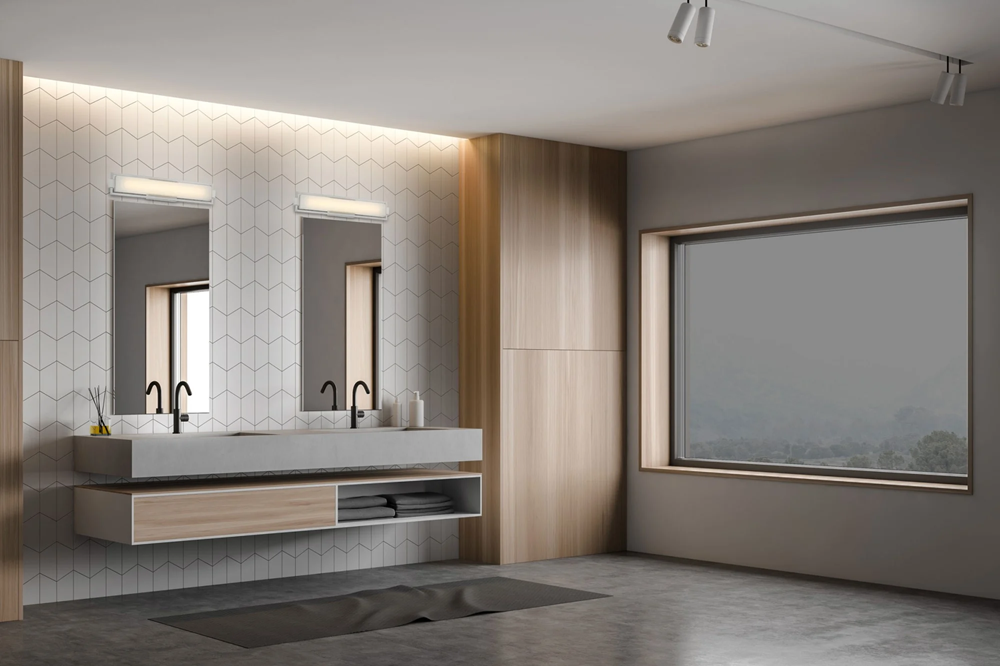
Even with the right fixtures, a few common mistakes can lead to lighting that feels harsh, uneven, or simply unflattering. Knowing what to avoid can make a noticeable difference in how your space looks and functions.
Vanity lighting works best when it’s approached as both a design element and a practical tool. From selecting the right fixtures to understanding placement, height, and color accuracy, each decision contributes to how well your bathroom supports everyday routines. When these elements come together, the result is lighting that feels natural, balanced, and easy to live with.
As you plan your space, think about how you use your bathroom on a daily basis. Consider where you need the most clarity, how your layout affects light distribution, and what kind of atmosphere you want to create. With the right combination of fixtures and thoughtful placement, it’s easy to achieve lighting that enhances both function and overall design. If you’re ready to upgrade your bathroom, explore the curated vanity lighting and bathroom lighting collections at Lightopia to find options that bring both performance and style into your space.
A color temperature between 2700K and 4000K works well for most bathrooms, depending on the feel you want to create. Warmer tones are softer and more relaxing, while cooler tones provide a brighter, more energizing effect. Many people prefer something in the middle, around 3000K to 3500K, for a balanced look. This range offers clarity without feeling too harsh or too dim.
Both options can work, but side lighting is often more effective at reducing shadows. Placing lights on either side of the mirror allows for more even illumination across the face. Overhead fixtures can still be useful, especially when combined with side lighting for a layered effect. The best lighting design plan will depend on your space and how much wall room you have available.
Brightness depends on the size of the bathroom and how the space is used, but the goal is to achieve clear, even illumination without glare. Layering different light sources can help distribute brightness more comfortably. Dimmable options are especially useful because they allow you to adjust the intensity based on the time of day or task. This flexibility makes it easier to create both functional and relaxing environments.
A CRI of 90 or higher is ideal for vanity lighting because it provides more accurate color representation. This is especially important for tasks like applying makeup or grooming, where color precision matters. Lower CRI lighting can make colors appear dull or slightly off, but choosing a higher CRI helps your reflection look more natural and true to life.
LED vanity lights are a popular choice because they’re energy-efficient, long-lasting, and available in a wide range of color temperatures and brightness levels. Many LED options also offer high CRI ratings, which improves color accuracy. In addition to performance, they often come in sleek, modern designs that work well in contemporary spaces. Overall, they provide a strong balance of efficiency, flexibility, and style.

THANK YOU!
Your discount code is on its way.
If you don't receive your promo code, please check your email junk or spam folder and click on "Not spam".
Free Shipping
Free standard shipping on all orders within the contiguous USA.
Orders to Canada, Alaska, Hawaii and Puerto Rico will incur additional shipping and handling fees, which will be calculated and presented at checkout. Canadian customers will be charged for all applicable customs duties, taxes, and brokerage fees.
For large, oversize items that require a surcharge above our shipping and freight partners’ standard shipping rates, an Oversize Processing Fee will be calculated in cart.