

Selecting the right ceiling lighting is one of the most important decisions you'll make when designing or updating a room. The ceiling fixture you choose impacts not only how well your space is illuminated, but also sets the tone for your room's overall aesthetic and functionality. Two of the most popular ceiling lighting options are recessed lighting and flush mount lighting, each offering distinct advantages depending on your specific needs and design goals.
Recessed lighting, also known as can lights or downlights, is installed directly into the ceiling to create a sleek, unobtrusive appearance. Flush mount lighting, on the other hand, attaches directly to the ceiling surface and comes in a wide variety of decorative styles. While both options provide effective illumination, understanding their differences in installation, performance, cost, and design impact will help you make the best choice for your space.
Recessed lighting creates a clean, modern look by housing the light fixture within the ceiling itself. These lights are installed flush with the ceiling surface, eliminating any visual protrusion and maintaining smooth ceiling lines. The result is subtle, directional lighting that can highlight specific areas or provide general illumination without drawing attention to the fixture itself.
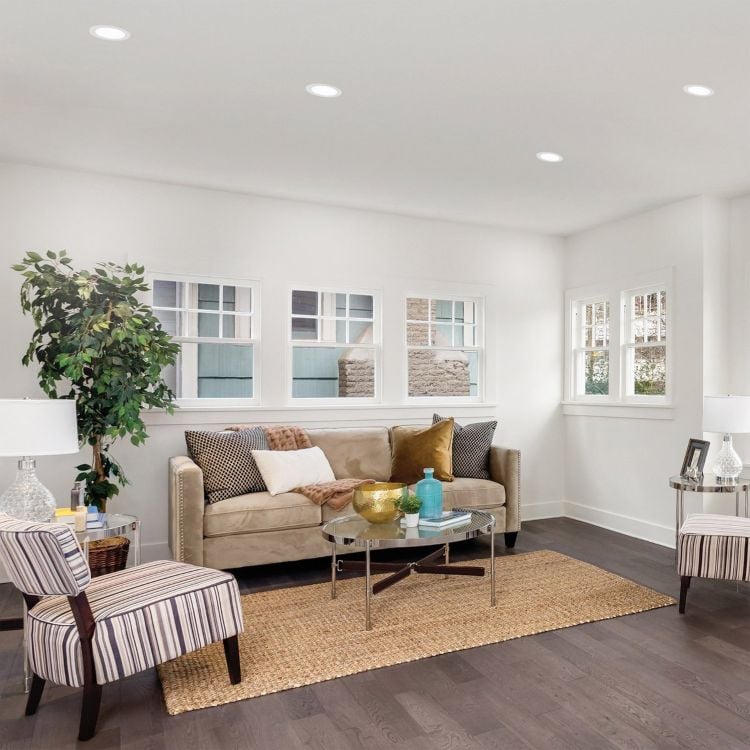
The basic structure of recessed lighting includes three main components: the housing (which sits above the ceiling), the trim (the visible portion that sits flush with the ceiling), and the bulb. The housing contains the electrical components and mounting hardware, while the trim determines both the appearance and light distribution pattern. Various trim styles are available to achieve different lighting effects, including baffle trim for reduced glare, reflector trim for maximum light output, open trim for a simple clean look, eyeball trim for directional lighting, pinhole trim for accent lighting, lensed trim for diffused light, and wall wash trim for illuminating vertical surfaces.

Installation of recessed lighting requires cutting holes into the ceiling and working with electrical wiring above the ceiling space. This process involves determining proper placement, ensuring adequate clearance from insulation and structural elements, and selecting the appropriate IC-rated (Insulation Contact) or non-IC-rated housings based on your ceiling's insulation situation. IC-rated housings are designed to be safely covered with insulation, while non-IC-rated housings require clearance space around them.
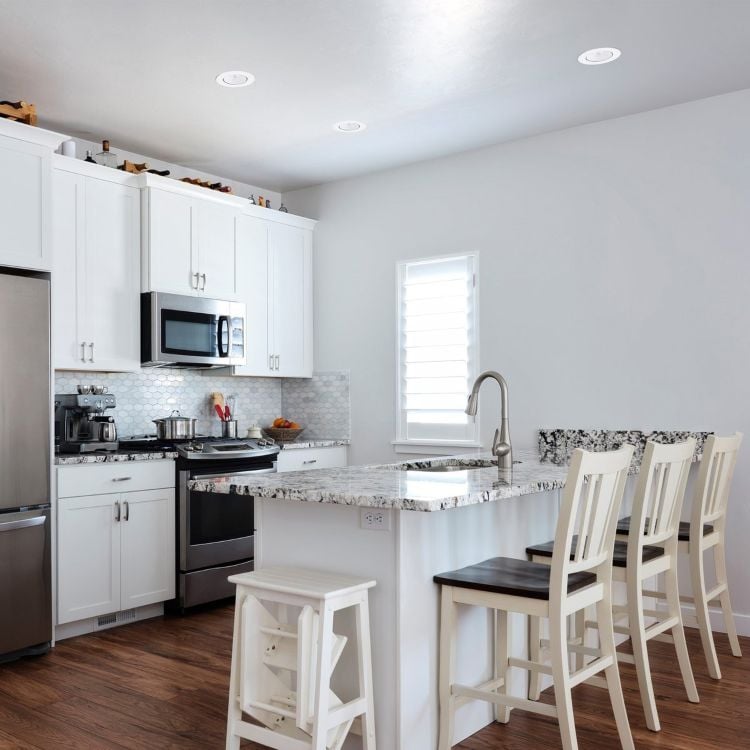
Recessed lighting excels in several specific applications. In rooms with low ceilings, recessed lights provide illumination without reducing headroom or creating visual clutter. They're particularly effective in modern, minimalist designs where clean lines and unobtrusive fixtures are prioritized. For task lighting applications, such as illuminating kitchen countertops, bathroom vanities, or reading areas, recessed lights can be precisely positioned to provide focused light exactly where needed.
The advantages of recessed lighting include its clean, contemporary aesthetic that complements modern design styles, its space-saving design that doesn't protrude from the ceiling, and its ability to provide directional lighting for highlighting artwork, architectural features, or specific work areas. These fixtures also offer flexibility in creating layered lighting schemes when combined with other light sources.
However, recessed lighting does have some drawbacks to consider. Installation is more complex and typically requires professional expertise, especially in existing homes where ceiling access may be limited. The installation process is also more costly due to the labor involved and potential need for electrical work. Additionally, improperly installed recessed lights can create heat buildup issues, requiring thermal protection sensors to prevent overheating. Because recessed lights provide focused rather than ambient lighting, you may need multiple fixtures to achieve even illumination throughout a room, which can increase overall costs.
Flush mount lighting fixtures attach directly to the ceiling surface, with the fixture body sitting against or very close to the ceiling. Semi-flush mount variants hang slightly below the ceiling surface, typically by a few inches, but still maintain a relatively low profile. These fixtures provide a more traditional approach to ceiling lighting and offer significantly more design variety than recessed options.

The structure of flush mount lighting includes several key components: a junction box mounted in the ceiling, a mounting pan or canopy that attaches to the junction box, lamp sockets to hold the bulbs, and a diffuser or light cover that distributes the light and provides the fixture's decorative appearance. The diffuser component is where much of the design variation occurs, available in styles ranging from simple bowl shapes to ornate decorative designs.

Flush mount fixtures come in numerous styles to complement different design aesthetics. Bowl-shaped fixtures provide clean, simple light distribution. Dome designs offer a classic look that works well in traditional spaces. Drum-style fixtures create a more contemporary appearance with their cylindrical shape. Beyond these basic forms, flush mount lighting is available in countless decorative designs, from vintage-inspired schoolhouse styles to modern geometric patterns, allowing you to choose a fixture that serves as both a light source and a design element.

Installation of flush mount lighting is considerably simpler than recessed lighting. In most cases, installation involves connecting the fixture to an existing ceiling junction box using basic electrical connections. This straightforward process makes flush mount fixtures much more DIY-friendly, though electrical work should always be performed safely and in accordance with local codes. The installation doesn't require cutting into the ceiling or working above the ceiling space, making it accessible for most homeowners.
Flush mount lighting is ideal for rooms with standard ceiling heights, typically 8 to 9 feet, where the fixture won't interfere with normal movement through the space. These fixtures work particularly well in bedrooms, hallways, closets, and other areas where general ambient lighting is the primary need. They're also excellent choices for spaces where you want the light fixture to contribute to the room's decorative scheme.
The primary advantages of flush mount lighting include the wide range of available styles and designs, making it easy to find fixtures that complement your existing decor. Installation is easier and less expensive than recessed lighting, often allowing for DIY installation. These fixtures typically provide broad, even light distribution that's ideal for general room illumination. They're also easily accessible for maintenance, bulb replacement, and cleaning.
The main disadvantages of flush mount lighting center around aesthetic and functional limitations. While offering more design variety than recessed lighting, flush mount fixtures are more visually prominent and may not achieve the sleek, minimalist look that some design styles require. They can also be less effective for directional or task lighting applications, as they're designed primarily for general ambient illumination. In rooms with very low ceilings, even flush mount fixtures may feel intrusive or reduce the perceived ceiling height.
The way each lighting type distributes light and consumes energy significantly impacts both your room's functionality and your utility bills. Understanding these performance characteristics helps ensure your chosen fixtures meet your space's specific lighting needs while operating efficiently.
Light distribution patterns differ markedly between recessed and flush mount fixtures. Recessed lighting provides focused, directional illumination that creates pools of light beneath each fixture. This characteristic makes recessed lights excellent for task lighting applications, such as illuminating kitchen countertops or highlighting artwork, but may require multiple fixtures to achieve even room illumination. The focused nature of recessed lighting can create dramatic lighting effects and allows for precise control over which areas receive primary illumination.
Flush mount lighting, conversely, provides broader ambient light distribution that illuminates larger areas more evenly. The diffuser components in flush mount fixtures spread light in multiple directions, reducing shadows and providing comfortable general illumination for activities like reading, conversation, or general room use. This broader distribution pattern typically means fewer fixtures are needed to adequately light a given space, though the trade-off is less precise control over light placement.
Energy efficiency considerations apply to both fixture types, but implementation details can affect overall efficiency. Both recessed and flush mount fixtures can utilize LED bulbs, which offer significant energy savings compared to traditional lighting technologies. LED bulbs typically use 75-80% less energy than incandescent bulbs while lasting 25 times longer. When selecting either fixture type, choosing LED-compatible options ensures maximum energy efficiency and minimal maintenance requirements.
Selecting between recessed and flush mount lighting requires careful consideration of your specific space, needs, and preferences. Several key factors should guide your decision-making process to ensure your chosen fixtures serve your space effectively for years to come.
Room function and lighting needs should heavily influence your choice. For spaces requiring precise task lighting, such as kitchen prep areas, home offices, or reading nooks, recessed lighting's directional capabilities make it the superior choice. For bedrooms, living rooms, and other spaces where general ambient lighting is the primary need, flush mount fixtures often provide more appropriate illumination. Consider how you use each space and what lighting quality will best support those activities.
Ceiling height and architectural features play crucial roles in fixture selection. Rooms with ceiling heights of 8 feet or less benefit from recessed lighting's space-saving design, while standard ceiling heights of 8-9 feet can accommodate either option effectively. If your space features interesting ceiling architecture—such as exposed beams, coffered designs, or decorative molding—consider how each fixture type will interact with these elements. Recessed fixtures maintain focus on architectural details, while flush mount fixtures can either complement or compete with existing ceiling features.
Remember that lighting is one of the most impactful design elements in your home, affecting both functionality and ambiance. Whether you choose the sleek sophistication of recessed lighting or the versatile appeal of flush mount fixtures, selecting the right option for each space will enhance your home's comfort, beauty, and functionality for years to come.

THANK YOU!
Your discount code is on its way.
If you don't receive your promo code, please check your email junk or spam folder and click on "Not spam".
Free Shipping
Free standard shipping on all orders within the contiguous USA.
Orders to Canada, Alaska, Hawaii and Puerto Rico will incur additional shipping and handling fees, which will be calculated and presented at checkout. Canadian customers will be charged for all applicable customs duties, taxes, and brokerage fees.
For large, oversize items that require a surcharge above our shipping and freight partners’ standard shipping rates, an Oversize Processing Fee will be calculated in cart.