

The difference between a comfortable, productive office and a draining one usually comes down to lighting. The brightness of your lights are important, but so is where they’re coming from, what they’re illuminating, and how they interact with your screen. When task lighting, ambient lighting, and positioning aren’t well-matched, even a beautiful space can feel off.
In this office lighting guide, you’ll learn how to build a layered office lighting setup that supports focus, reduces eye strain, and helps you choose the right fixtures and controls for a balanced workspace.

Office lighting directly impacts how well a workspace actually functions day to day. It affects how clearly you can see your work, how your eyes feel after long periods, and how easily the room supports focus. Even spaces that feel bright enough overall can become uncomfortable if the light isn’t directed properly or if the desk, screen, and surrounding room aren’t balanced. Poor lighting designs often create issues like glare on the screen, harsh contrast between bright and dark areas, or shadows that make tasks like reading, writing, and detailed work more difficult than they should be.
One secret to learning how to light your home office is to recognize that these problems don’t always stem from a lack of light. Often, they’re a product of how the light is placed and layered.
A stronger lighting plan uses more than one light source so the workspace feels even and usable. One of the simplest home office lighting ideas to implement is combining focused task lighting at the desk, soft ambient light in the background, and the flexibility to adjust brightness throughout the day. When you design the best office lighting for your space, your office will feel more comfortable, less fatiguing, and better suited for focused work or screen-based tasks.
The four primary office lighting layers are ambient, task, accent, and video-call lighting. Let’s explore the purpose of each layer and the fixtures that can be used to achieve them.
| Lighting Layer | Purpose | Common Office Fixtures |
|---|---|---|
| Ambient lighting | General room brightness | Ceiling lights, recessed lights, track lighting, floor lamps |
| Task lighting | Reading, writing, computer work | Desk lamps, task lamps, reading lights |
| Accent lighting | Comfort and visual depth | Table lamps, wall lights, shelf lighting |
| Video-call lighting | Even face lighting for calls | Desk lamps, adjustable lamps, soft front-facing light |
The strongest office lighting plans typically start with the desk, as that’s where most of the workday is spent.
Task lighting is the hardest-working layer in most offices because it directly supports reading, writing, and screen-based work. Well-placed desk lamps should brighten the work surface without reflecting on the monitor, creating harsh shadows, or shining into your eyes. Placement matters just as much as brightness. In most cases, the light should be placed slightly off to the side so it illuminates the desk rather than the screen. Task lights work best when they’re close to the work surface.
Adjustable desk lamps, dimmable designs, and reading and swing lights make it easier to redirect light as tasks and needs change throughout the day. Task lighting should support the workspace without overpowering it, which is why it works best alongside ambient light instead of as the room’s only light source. Right-handed users will typically prefer a lamp on the left side of the desk to reduce hand shadows, while left-handed users often reverse that setup. In any case, the goal is to bring clear light to the workspace without interfering with the screen or fatiguing the eyes.
Ambient office lighting brings general brightness to the room so it doesn’t feel overly dark compared to the desk or screen. This layer is important because it helps balance contrast between the computer and the surrounding space, reducing eye strain and visual fatigue. Ambient light can come from ceiling lights, recessed lighting floor lamps, track lighting, or a combination of multiple sources. The even background illumination supports the workspace without becoming the focal point of the room.
Ceiling lights should be diffused to avoid screen reflection. Recessed fixtures should be spaced thoughtfully to prevent uneven pools of light, and track lighting works best when it’s aimed at walls or shelves instead of at the desk. Floor lamps can bring soft, usable illumination that fills lighting gaps in rooms without overhead fixtures. Ambient lighting should always act as a balancing layer that makes the workspace feel complete and comfortable, not contrast-heavy or overly bright.
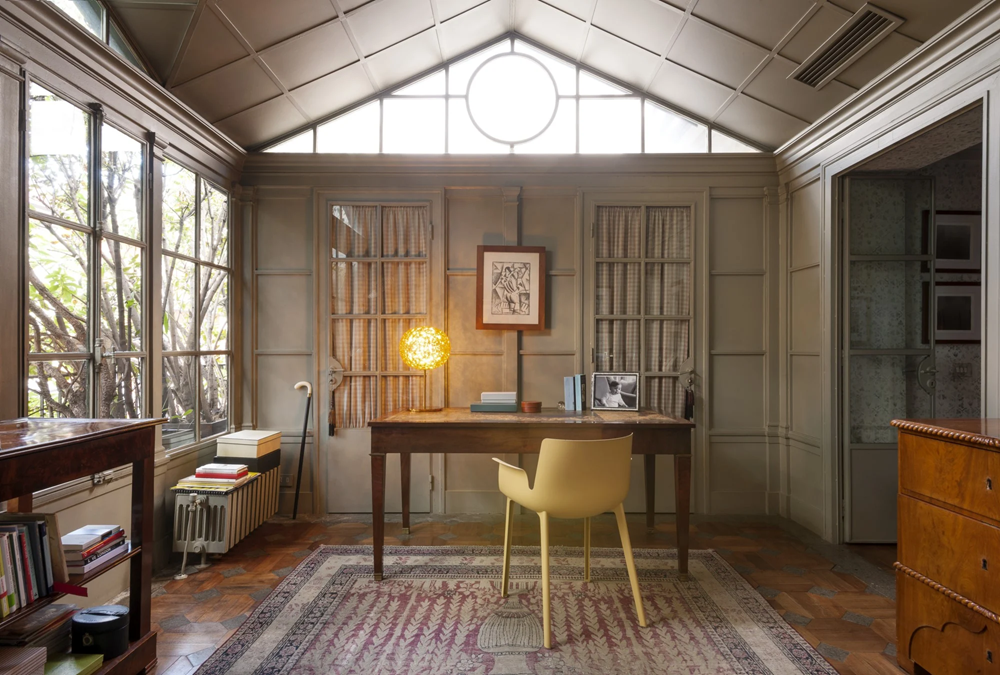
Accent lighting keeps an office from feeling overly flat, clinical, or screen-heavy. While task lighting handles focused work, accent lighting adds warmth, depth, softness, and a more comfortable, inviting atmosphere around the workspace itself. It can highlight shelves, artwork, bookcases, or architectural details, but it also plays an important role in making the room feel more balanced through long work hours or when your workday extends into the evening.
The accent layer is where smaller decorative features become useful. Table lamps work well on consoles, cabinets, or bookshelves to visually soften the room, while floor lamps can fill darker corners or add a warm glow to seating areas. Wall lighting introduces depth without sacrificing desk space, especially in smaller offices. Accent lighting can improve the background during video calls by keeping the room from feeling dark or one-dimensional. For the most flexibility, it’s best to keep low-glare accent lighting on separate controls from the main task lighting so the room can shift easily throughout the day.
Office lighting works best when it’s planned around how each part of the workspace is actually used throughout the work day. Different tasks require different types of light, from focused brightness at the desk to softer ambient layers that help balance the overall room. The goal is to support productivity without creating glare, shadows, or visual fatigue. The table below breaks down the most effective lighting options for each office zone so you can build a functional, well-balanced lighting plan.
| Office Area | Best Fixture Types | Placement Notes |
|---|---|---|
| Desk surface | Desk lamp, task lamp, reading light | Place to the side to reduce glare and shadows |
| Computer screen | Indirect ambient light | Avoid reflections and harsh contrast |
| Room center | Ceiling light, recessed lighting, track lighting | Use as the general layer |
| Reading chair | Floor lamp, reading floor lamp | Choose directional task light |
| Bookshelves | Table lamps, accent lights | Add warmth and depth |
| Video-call background | Table lamps, wall lights, soft accent light | Avoid overly dark or cluttered backgrounds |
| Small office | Desk lamp, wall-mounted light, floor lamp | Save surface space |
| Shared office | Multiple lamps, separate controls | Let each person control their own task light |
To make video calls clear and well-lit, illumination should come from the front or slightly off-center without backlighting from windows or lamps behind you. Placing the light near your camera helps create a more natural, balanced look, especially when you choose soft, diffused light that reduces harsh contrast. It’s also important to keep color temperature consistent within the frame, as mixing tones can feel distracting on camera. A soft desk lamp, adjustable task light, or balanced ambient lighting design creates a more natural, camera-ready look. If the room feels flat or uneven, a subtle background light can add depth without pulling focus.
For more control and consistency, choosing dimmers and the right light bulbs can also make a noticeable difference in how the lighting looks on video and how easy it is to adjust as daylight changes.
Office lighting feels most balanced when it supports focus without creating visual fatigue. Neutral white light is often most effective for daytime productivity, while warmer tones feel better suited to evenings or multi-use spaces like bedrooms or living areas. Avoiding lights that feel overly blue or harsh keeps the space from feeling clinical. Light output should be guided by lumens rather than watts, and task lighting should be brighter than ambient or accent layers to keep the workspace clear and usable.
Maintaining consistent color temperature within the main work zone also helps prevent visual imbalance and distraction around the desk and screen. For greater flexibility, dimmers and adjustable fixtures make it easy to switch between focused daytime work and softer evening lighting. Integrated light controls and outlets can also help manage multiple lighting layers within the same space.

Office lighting changes depending on how the space is used and how much room you have to work with. Dedicated home offices might allow for a fully layered approach, while multi-function rooms need compact, focused solutions that still support comfort, visibility, and screen balance. Adapting your lighting to suit the workspace is the best approach.
Dedicated home offices benefit from layered lighting that separates task, ambient, and comfort lighting for full-day use, including video calls.
A small office or desk nook needs compact lighting that supports the desk without taking up already-limited usable space.
Bedroom offices need lighting that can shift between focused daytime work and softer evening use.
A shared workspace works best with independent task lighting supported by a shared ambient layer.
Most office lighting issues come down to relying on the wrong setup or failing to create balance between layers. A few simple missteps can make the space feel less comfortable and harder to work in, but they’re easy to avoid if you know what to look for:
A solid office lighting design comes down to planning the space first, then choosing fixtures that support how you actually work every day.

A well-designed office lighting plan always starts with the desk and screen, then builds outward in thoughtful layers. Task lighting supports focused work, ambient lighting keeps the room comfortable, and accent lighting brings warmth to make the space feel finished. Video-call lighting is the final layer that helps a workspace look balanced on camera. Everything works better when these layers are considered together, along with simple, practical controls that allow you to adjust brightness throughout the day. When the setup is right and you choose your office lighting for productivity, the office feels supportive, functional, and easy to work in, even on those long days.
Ready to bring comfort and balance to your workspace? Explore Lightopia’s office lighting, including desk, floor, and table lamps, ceiling lights, bulbs, and adjustable controls. With a few intentional choices, your workspace will support focus and everyday productivity like never before.
The best home office lighting thoughtfully blends focused task lighting with comfortable ambient light throughout the rest of the room. A desk lamp supports task work at the desk, while ceiling lights, floor lamps, or recessed lighting keep the surrounding space from feeling overly dark around the screen.
Desk lamps serve many purposes, but they’re not sufficient as a sole light source. If the screen is much brighter than the surrounding space, the contrast can become tiring for the eyes. Layering task lighting with soft ambient light creates a more balanced and comfortable workspace.
Neutral white light is often the best fit for focus and daytime productivity because it feels clear, but not overly bright. Warmer light can feel more comfortable later in the evening, especially in offices that double as bedrooms or living spaces. Adjustable or dimmable lighting offers the most flexibility throughout the day.
Instead of positioning lights behind or directly in front of the screen, place them to the side of the desk. It’s also helpful to use diffused light, make sure bulbs aren’t directly reflected on the monitor, and control daylight by adjusting desk placement, blinds, or curtains.
Yes, floor lamps are an excellent addition to offices, especially those that don’t have overhead lighting for ambient illumination. Floor lamps are the perfect solution in dark corners, shared offices, and reading chair zones.
Video calls look best when the light source is slightly off-center or soft illumination comes from the front. The key is to avoid harsh shadows, keep the face evenly lit, and avoid strong backlighting from windows or lamps behind you.
While the exact number will vary depending on your space, most offices benefit from at least two layers. With task lighting at the desk and ambient light filling the room, you can avoid problems like glare and harsh lighting. Adding accent lighting, floor lamps, or dedicated lights for reading or video calls is particularly useful in larger offices.
Dimmers are helpful for office lighting because brightness should be adjustable throughout the day. With dimmers and adjustable lamps, it’s easy to move from focused daytime work to softer illumination for evening use.
THANK YOU!
Your discount code is on its way.
If you don't receive your promo code, please check your email junk or spam folder and click on "Not spam".
Free Shipping
Free standard shipping on all orders within the contiguous USA.
Orders to Canada, Alaska, Hawaii and Puerto Rico will incur additional shipping and handling fees, which will be calculated and presented at checkout. Canadian customers will be charged for all applicable customs duties, taxes, and brokerage fees.
For large, oversize items that require a surcharge above our shipping and freight partners’ standard shipping rates, an Oversize Processing Fee will be calculated in cart.