
Thanks to their low ceilings and lack of windows, finding good basement lighting can feel like a balancing act. Unlike the main floors of a home, basement ceilings are typically lower and can include exposed beams, ductwork, or soffits that make the space feel even tighter. Choosing the wrong lighting can exaggerate these limitations with shadows, glare, or fixtures that hang too low and make the room feel cramped.
The good news is that with the right low ceiling lighting approach, you can dramatically improve how a basement feels. Slim ceiling fixtures, strategic placement, and thoughtful light distribution can brighten the space while preserving valuable headroom. With the right combination of fixtures and layout techniques, even a basement with a lower ceiling can feel comfortable, open, and welcoming.
In the sections below, we’ll explore fixture types designed for 7- to 8-foot ceilings, techniques for making a basement feel taller, and common lighting mistakes to avoid as you plan your layout.
In most homes across the United States, the standard ceiling height is around 8 feet. While this height might work well for living rooms and bedrooms, basement ceilings often feel lower because of structural elements like joists, pipes, or dropped ceilings. In finished basements, ceiling height may fall somewhere between 7 and 8 feet. That’s why fixture selection is especially important. Picking the right lighting for a basement isn’t just about brightness. Fixtures for low ceilings should keep the ceiling visually clean, avoid hanging too low, and distribute light evenly throughout the space. Fixtures that sit close to the ceiling or integrate directly into it tend to work best in basements because they preserve vertical space while still providing strong illumination.
When you’re planning a lighting layout for low ceilings, consider both fixture scale and spacing. Larger fixtures can overwhelm a smaller basement ceiling, while fixtures that are too small may fail to brighten the entire room. Spacing multiple fixtures evenly across the ceiling often produces better results than relying on a single central light source.
Fortunately, several fixture styles are designed to work well in spaces with low ceilings.

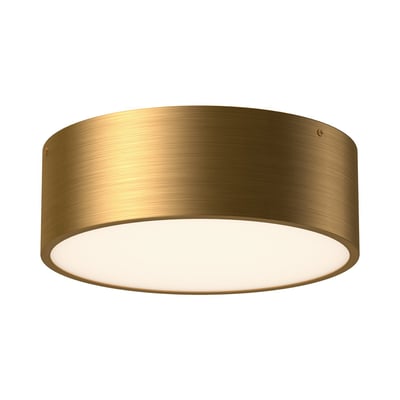
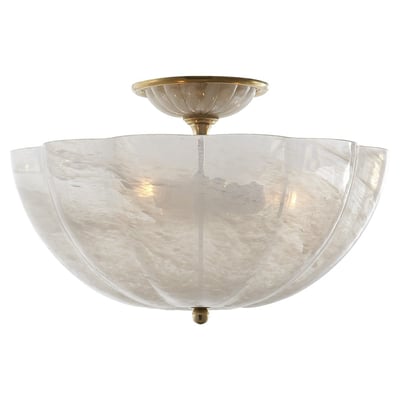
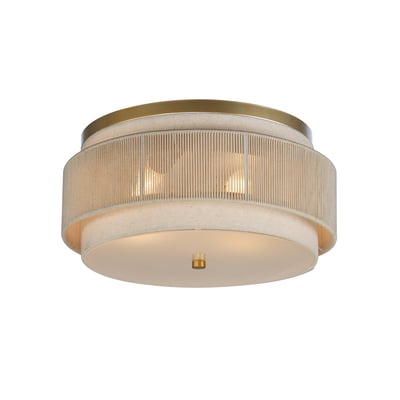
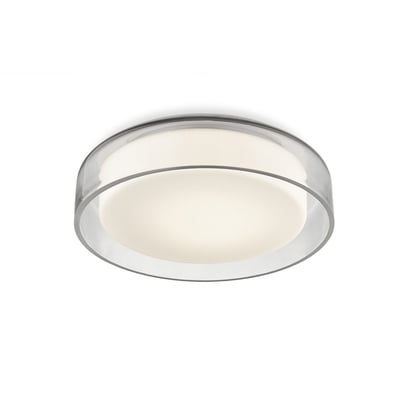
Low-profile flush mount lights are one of the most practical choices for basement ceilings. These fixtures sit directly against the ceiling surface, which helps maintain headroom while still delivering strong overhead illumination. A low-profile flush mount is typically defined by its shallow depth and compact shape. Many designs extend only a few inches from the ceiling, making them ideal for basements where every inch of vertical space matters. Because the fixture remains close to the surface of the ceiling, it allows people to move comfortably through the room without feeling like the lighting is hanging overhead or interfering with sight lines across the room.
Flush mounts also work well with a wide range of design styles. Simple drum-shaped fixtures blend seamlessly into modern or transitional spaces, while glass dome styles suit more traditional interiors. In basements that serve as family rooms or entertainment areas, neutral designs often provide the most flexibility as the space evolves over time. When it comes to installing flush mount lighting, spacing is key. Rather than placing a single fixture in the center of the ceiling, multiple fixtures spaced evenly throughout the room can provide more balanced illumination. This approach helps eliminate dark corners and leaves the entire basement feeling bright and usable.

Ultra-thin recessed LED lights are another excellent solution for low basement ceilings. Unlike traditional recessed cans, which require significant space above the ceiling, these slim fixtures are designed to fit into tight areas where joists or ductwork might otherwise prevent installation. Ultra-thin recessed lights typically use a flat LED panel connected to a small driver box, which allows them to sit almost flush with the ceiling surface. This minimal profile helps maintain a clean ceiling line while still delivering strong, even light throughout the room.
These fixtures are especially useful in basements with drop ceilings or finished drywall ceilings that leave limited space for traditional recessed housings. Because they require only a shallow installation depth, they can often be placed in areas where standard recessed lighting wouldn’t fit. Placement plays an important role in achieving even illumination. Many homeowners install recessed lighting in a grid pattern, spacing them evenly across the ceiling to avoid shadowy areas. This approach works particularly well in multipurpose basements that may include seating areas, workspaces, or game tables.

Track lighting is a flexible option for basements where a single fixture needs to illuminate multiple areas. Instead of relying on one fixed light source, track systems allow several adjustable light heads to be mounted along a ceiling-mounted track. Each light head can be angled independently, which makes it easy to direct light toward seating areas, shelving, or architectural features. This adjustability can be especially helpful in basements that serve several purposes, such as a media room, home gym, playroom, or hobby space.
Because the track mounts directly to the ceiling, it preserves valuable headroom while still offering directional lighting. Modern track systems also tend to have slim, streamlined profiles that blend well with contemporary basement designs. Another advantage is adaptability. If the layout of the basement changes over time, the light heads can simply be repositioned along the track or aimed in new directions. This flexibility makes track lighting a practical choice for homeowners who want lighting that can evolve along with the space.

LED strip lighting is a creative way to add illumination to a basement without introducing bulky fixtures. These flexible light strips can be installed along ceiling edges, behind soffits, beneath shelving, or even along architectural details to create subtle ambient lighting. Because LED strips are extremely thin, they’re ideal for spaces where traditional fixtures might feel intrusive. When installed in concealed locations such as crown molding channels or recessed ledges, the light appears to glow softly from the edges of the room rather than from a visible fixture.
This technique can be particularly effective in basements because it helps distribute light across the ceiling and walls without lowering the perceived height of the room. Soft perimeter lighting also reduces harsh shadows, which can make a basement feel more open and comfortable. LED strips can also be used as accent lighting alongside other ceiling fixtures. When layered with recessed lights or flush mounts, strip lighting adds depth and visual interest while supporting the overall lighting design.
Lighting can influence how spacious a basement feels. Even when the ceiling height can’t be changed, thoughtful lighting placement can help create the illusion of a taller, more open room. One effective technique is wall washing. This involves positioning light so it spreads evenly across vertical wall surfaces rather than focusing only on the floor. When walls are illuminated from top to bottom, the eye naturally follows the vertical plane, which makes the room appear taller.
Up-lighting can produce a similar effect. Fixtures that direct light upward toward the ceiling create a soft glow that brightens the upper portion of the room. This draws attention away from the lower ceiling line and helps the space feel more expansive. Another important strategy is even fixture spacing. When lighting is distributed consistently across the ceiling, the room feels balanced and visually organized. Dark corners or uneven light patterns can make a basement feel smaller, while consistent illumination helps the entire space appear larger.
For the best results, consider layering these techniques. For example, recessed ceiling lights can provide general illumination, while LED strip lighting highlights architectural details and wall washing brightens vertical surfaces. Together, these layers create a well-lit environment that feels more open and comfortable despite the lower ceiling.
One of the most common basement lighting mistakes is relying on a single center fixture to illuminate the entire room. While this approach may seem simple, it often leaves corners dark and creates uneven lighting throughout the space. Basements typically benefit from multiple light sources spaced evenly across the ceiling instead of one central light. Another common issue is choosing cool, harsh color temperatures. Light that appears overly blue or stark can make a basement feel cold and uninviting. Many homeowners find that bulbs in the 3000K to 3500K range provide a more comfortable balance and the right amount of brightness while still maintaining a warm, welcoming atmosphere.
Fixture scale is another factor worth considering. Large pendant lights or chandeliers may look appealing in other parts of the home, but they can quickly reduce headroom in a basement with lower ceilings. Selecting low-profile fixtures helps maintain a sense of openness while still providing effective illumination. When these common pitfalls are avoided and lighting is layered thoughtfully, basements can become some of the most comfortable and practical rooms in the home.
Thoughtfully layering flush mounts, recessed lights, track lighting, and accent solutions allows homeowners to brighten the entire space without sacrificing headroom. To explore lighting for lower ceilings, browse the collection of basement-friendly fixtures available at Lightopia.
Low-profile light fixtures usually work best in basements with limited headroom. Slim recessed lights, low-profile flush mount fixtures, track lighting, and strip lighting provide strong illumination without hanging down into the room. These designs help maintain a clean ceiling line while keeping the space comfortable to move through. In many basements, combining several compact fixtures produces the most balanced lighting and a layered, well-curated, cozy ambiance.
A color temperature between 3000K and 3500K generally works well in basement environments. This range provides clear, bright illumination while still maintaining a warm, comfortable tone. Cooler temperatures can sometimes make basements feel sterile or overly harsh. Choosing a balanced temperature helps the space feel more welcoming while still providing adequate visibility.

THANK YOU!
Your discount code is on its way.
If you don't receive your promo code, please check your email junk or spam folder and click on "Not spam".
Free Shipping
Free standard shipping on all orders within the contiguous USA.
Orders to Canada, Alaska, Hawaii and Puerto Rico will incur additional shipping and handling fees, which will be calculated and presented at checkout. Canadian customers will be charged for all applicable customs duties, taxes, and brokerage fees.
For large, oversize items that require a surcharge above our shipping and freight partners’ standard shipping rates, an Oversize Processing Fee will be calculated in cart.