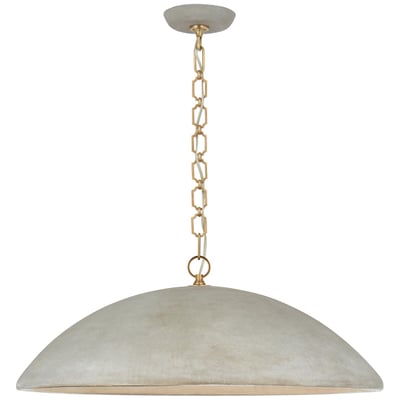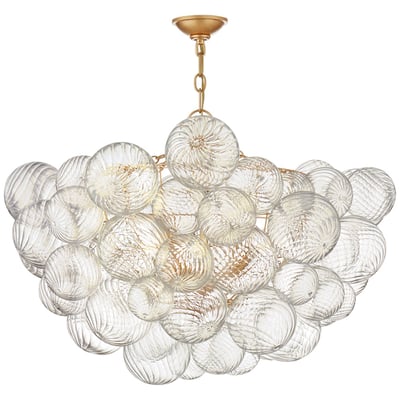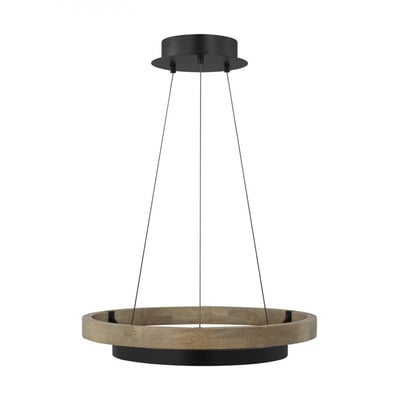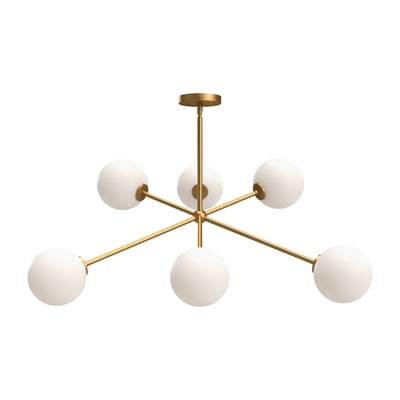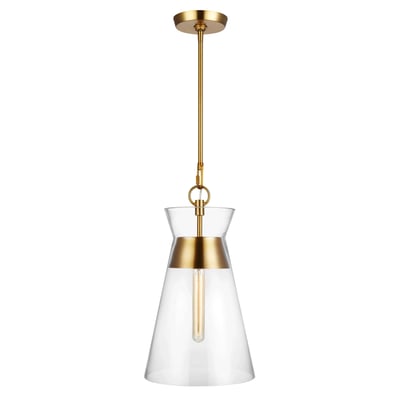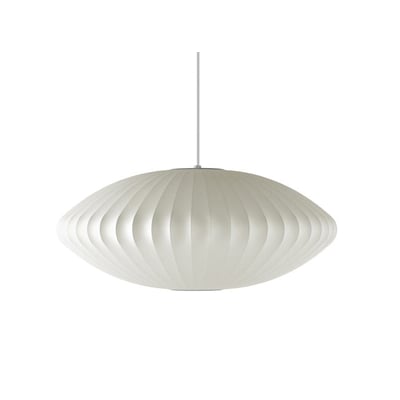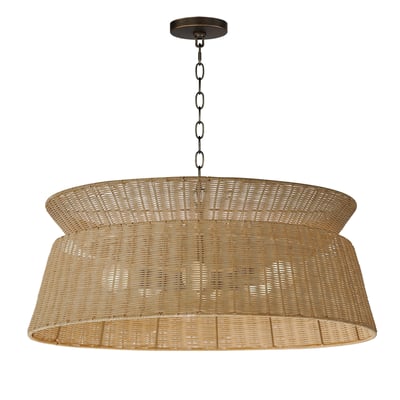

While choosing a light that fits your dining room’s overall size and layout is important, it is equally important to know what height to hang a dining room table light at. If the light is too high, then the room may feel too dim. Conversely, if the light is hung too close to the table, then the light may be too bright atop the table and the rest of the room will be left feeling empty because of it. The proper fixture height will ensure that your dining room is as functional as possible while establishing your ideal tone and ambiance. To help you answer the question of how high to hang a dining room light, we’ve created a full guide of how and where to install lights, common mistakes to avoid, and general installation tips to help you establish the perfect lighting scheme for your dining room.
Dining table lights serve multiple purposes. One practical purpose is that hanging lights at the proper height will ensure that you can comfortably eat, talk, and traverse your dining room without glare or shadows. Aside from these functional benefits, the light can establish a comfortable ambiance and define your room’s aesthetic. Today’s lighting fixtures are designed for both practicality and style, which means you can easily select a dining light that fits all your room’s practical needs without sacrificing beauty.
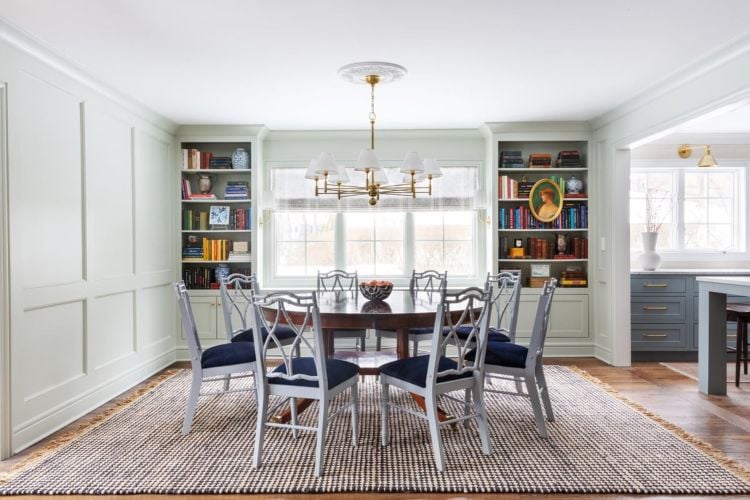
What height should a dining room light be? There’s no singular answer, but there are general guidelines to instruct you based on standard dining room size and layout. Most modern dining rooms have 8 foot tall ceilings. Based on this standard, the bottom of the chandelier should hang approximately 30-36 inches above the dining table. That placement creates the proper lighting balance for the table and nearby area while also ensuring that the chandelier can act as a primary focal point.
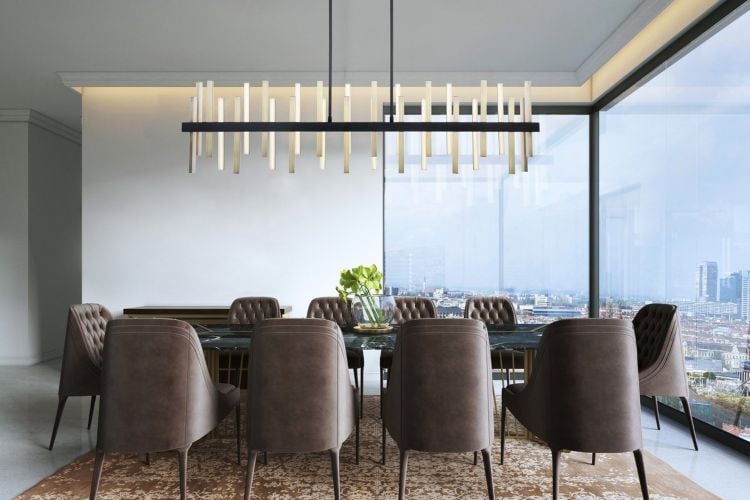
In cases where the room is taller, there is a simple formula to figure out how far above dining table should light be. Simply add 3 inches to the distance for each foot taller the ceiling is. For example, if the dining room ceiling is 9 feet tall, then the chandelier should be 33-39 inches above the table instead of 30-36 inches above.
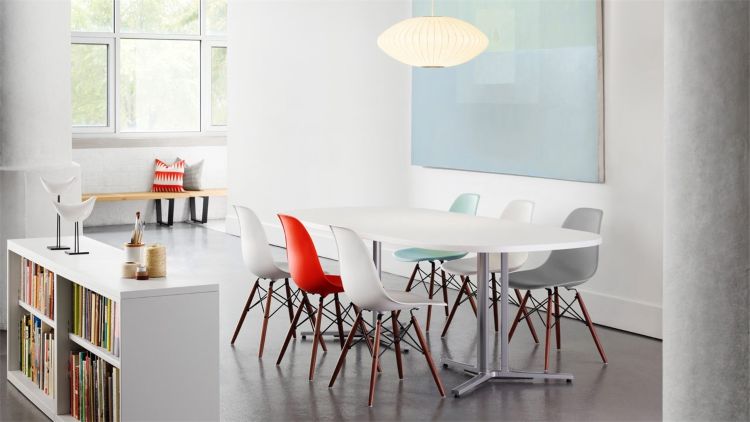
These general guidelines are effective in giving you a starting point for where to hang your light, but the size of your fixture also impacts how to hang light over a dining table. Smaller lighting fixtures can be hung lower to ensure that the table is adequately lit while larger chandeliers and pendant lights are typically higher to avoid overwhelming the dining space.
Just how high should a light be above a dining table? There are many factors that impact the table’s placement, including the size and shape of the table, the room’s size, and the purpose you want your light to serve.
One of the first aspects to consider is the light’s proportions in relation to the table. In general, your dining room chandelier or pendant light should be about one half or two-thirds the length of your table. It is also common practice to have the shape of your light mimic the shape of your table. In other words, a rectangular or linear chandelier goes with a rectangular table. This rule can be broken in more eclectic or contemporary spaces where normal design conventions are optional.
The size of the room is another area to consider. The larger your room, the larger the lighting fixture it can accommodate. This applies to rooms that are larger in square footage and those that have taller ceilings. Along with that, it is important to choose a light that fits your room and fulfills whatever function you need it to. If your goal is general ambiance as opposed to lighting the entire room, you may use a smaller fixture at a different height. If you want a well lit room fit for practical task lighting, then that will also dictate your light’s placement, size, and height.
The most important thing to remember is that your dining room should be both beautiful and practical. Taking the whole room into account and developing the entire room’s lighting plan will help you select the proper dining room light, decide how low should a dining room light hang, and what other lights are needed to brighten the room.
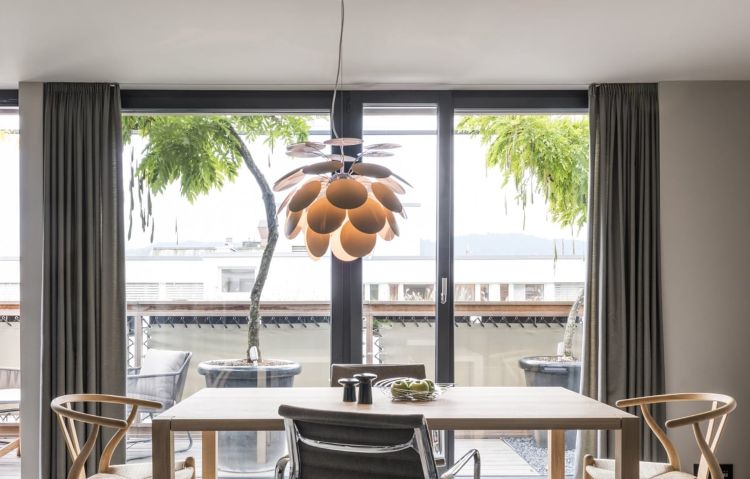
Since dining room table lights serve such a vital role in the room’s design and utility, it is important to avoid these common pitfalls. Choosing the right fixture ensures both aesthetic appeal and proper illumination for your space.
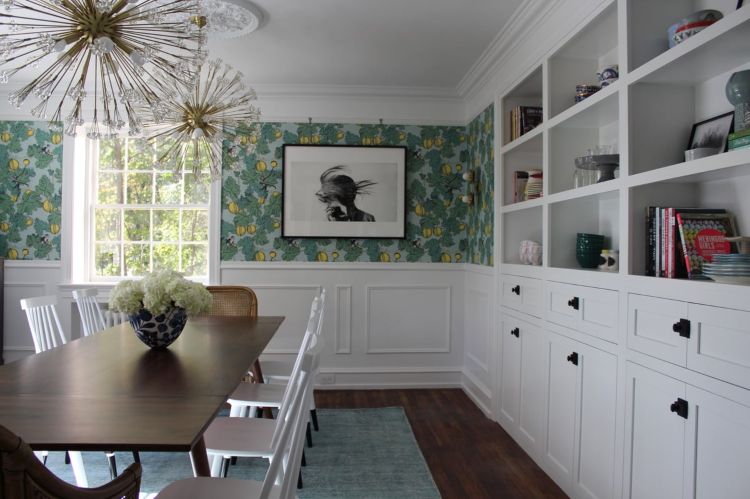
Improper Fixture Size: Choosing a fixture that is too large or small can disrupt the overall balance of the room while also negatively impacting the room’s lighting scheme by being too bright or dim.
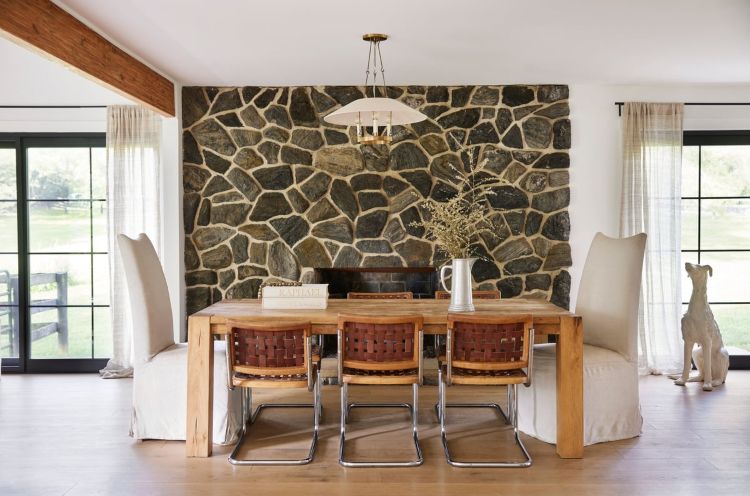
Incorrect Hanging Height: If the light is too high, then the light may be too spread out across the room and not adequately light the table. If hung too close to the table, the rest of the room may suffer from dim lighting. Plus, lights that are too close to the table can glare off the table’s surface and cause discomfort.
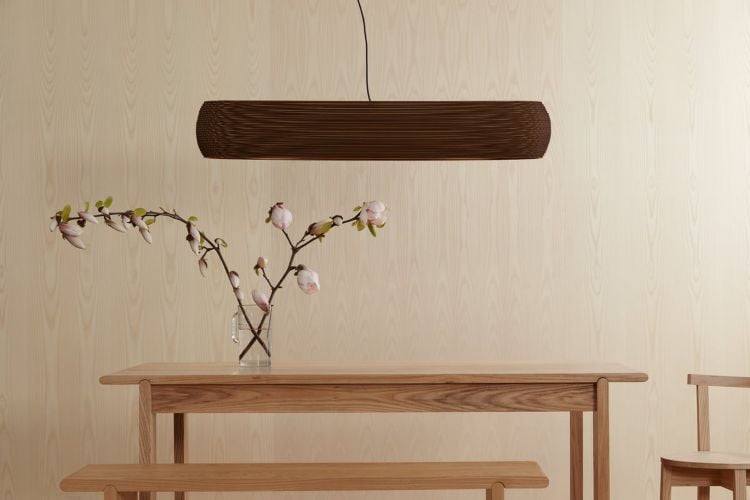
Neglecting Dimmers: Dimmer switches are a simple yet highly impactful design choice. Dimmers allow you to achieve your proper lighting balance depending on what function you want the room to serve and what tone you want to set.
As important as central dining table lights are, they are merely one piece of the puzzle in the dining room. In most cases, a singular table light is not enough to establish the proper lighting balance and fulfill the practical needs of the room. Pairing a dining chandelier with other fixtures such as wall sconces, floor lamps, or decorative ambient candles can help you create a well rounded lighting scheme and add a layer to your room’s design. Recessed ceiling lights can also ensure your room is well lit without taking away from that focal light.
Dimmers and smart lighting also add dimension to your dining room’s lighting plan. Both of these elements allow for further customization of tone and lighting intensity so that your room is able to accommodate more activities, gatherings, and occasions.
Of course, natural lighting plays a key role in the overall lighting scheme of the room as well. Natural lighting has a warmth to it that pairs well with other warm dining lights. To establish a cohesive and harmonious tone, it is vital that your artificial lights and natural light convey the same tone and work together in establishing the proper mood.
Dining room table lights have a great impact on the room’s tone, style, and overall practicality. The fixture itself is important, but equally important is how high above kitchen table should light be. Placing a light at the proper height will ensure that the table is well lit, the proper ambiance is established, and that the light balances with the room’s other furnishings/decor. While there are general guidelines of how high to place a table and where, each room is truly unique, so you should consider your personal dining room and tailor your light to suit your room’s uses and aesthetic. When in doubt, there are also lighting professionals and interior designers who can offer personalized advice and guidelines on how to use lights in your room. Taking the proper time, doing research, and reaching out to professionals when necessary will help you choose the best dining room lighting fixture and placement for your dining room.

THANK YOU!
Your discount code is on its way.
If you don't receive your promo code, please check your email junk or spam folder and click on "Not spam".
Free Shipping
Free standard shipping on all orders within the contiguous USA.
Orders to Canada, Alaska, Hawaii and Puerto Rico will incur additional shipping and handling fees, which will be calculated and presented at checkout. Canadian customers will be charged for all applicable customs duties, taxes, and brokerage fees.
For large, oversize items that require a surcharge above our shipping and freight partners’ standard shipping rates, an Oversize Processing Fee will be calculated in cart.