

Bedrooms aren’t just for sleep - they’re versatile, multipurpose spaces. Your bedroom is where you wind down at night, read a few pages before bedtime, get dressed in the morning, and sometimes even find the time to relax during the day. Despite all the needs this room meets, many of today’s bedrooms still rely on a single overhead fixture to illuminate every activity. While overhead lighting may technically light the room, it rarely creates the comfort, flexibility, or atmosphere most people crave in their coziest spaces.
Thoughtful bedroom lighting works best when it’s built in layers. Instead of depending on one ceiling light source, designers combine multiple types of illumination to support different activities and moods throughout the day. In this guide, we’ll explain how layered lighting works in the bedroom, how dimmers transform the way your space feels, and how to position fixtures so every part of the room is both functional and inviting. If you’re planning a lighting refresh, exploring a curated collection of bedroom lighting fixtures can also help you visualize how all these different fixtures can work in perfect harmony.

Designers often talk about lighting in terms of layers because each type serves a different purpose. A well-designed layered lighting bedroom setup thoughtfully combines general illumination, focused task lighting, and subtle accent lighting to create balance and flexibility. When these three layers work together, the room can easily shift from bright and functional to calm and relaxing. Let’s break down exactly how each layer contributes to a comfortable and practical bedroom.
Ambient lighting provides the overall brightness that allows you to move comfortably through a room. In most bedrooms, this comes from ceiling-mounted fixtures that distribute light evenly across the space. A good rule of thumb is to aim for roughly 10 to 20 lumens per square foot, which offers enough brightness for everyday activities without feeling harsh or clinical.
Several types of fixtures can serve as ambient lighting in a bedroom:
While the fixture itself plays a big role, the control system matters just as much. Bedrooms benefit tremendously from dimmers because they allow one light to perform multiple roles. Bright light can help you start the day, while softer illumination supports evening relaxation. Without dimming capability, even a well-chosen ceiling fixture can feel too intense at night. Because ambient lighting fills the entire room, it forms the foundation for the rest of the lighting plan. Once this base layer is in place, other fixtures can be added to support more specific activities.
Task lighting is designed to illuminate specific areas where focused activities take place. In a bedroom, this typically means reading in bed, applying makeup, working at a desk, or completing laundry tasks. Unlike ambient lighting, which spreads light across the room, task lighting directs illumination exactly where it’s needed.
Common task lighting options for bedrooms include:
When it comes to task lighting, proper placement is important. Bedside lamps should sit close enough to reach comfortably while lying down, and the shade should direct light downward toward the reading area rather than into your eyes. Wall-mounted reading lights should be installed slightly above shoulder height so they illuminate the page or surface below. A well-curated task lighting plan ensures that everyday bedroom activities feel comfortable and effortless. When paired with ambient lighting, these fixtures provide flexibility without overwhelming the room with unnecessary brightness.
Accent lighting introduces subtle highlights that add dimension and character to the bedroom. Instead of providing large amounts of light, these fixtures emphasize architectural details or create a softer, more atmospheric environment.
Several accent lighting techniques work especially well in bedrooms:
Accent lighting works best when it complements the other two layers rather than competing with them. These fixtures usually produce a softer glow that enhances the room’s visual depth while maintaining a calm atmosphere. Because accent lighting is often subtle, it can dramatically change the feel of a bedroom without dramatically increasing brightness.
When all three layers work together, the result is a tailored lighting plan that supports both function and comfort.
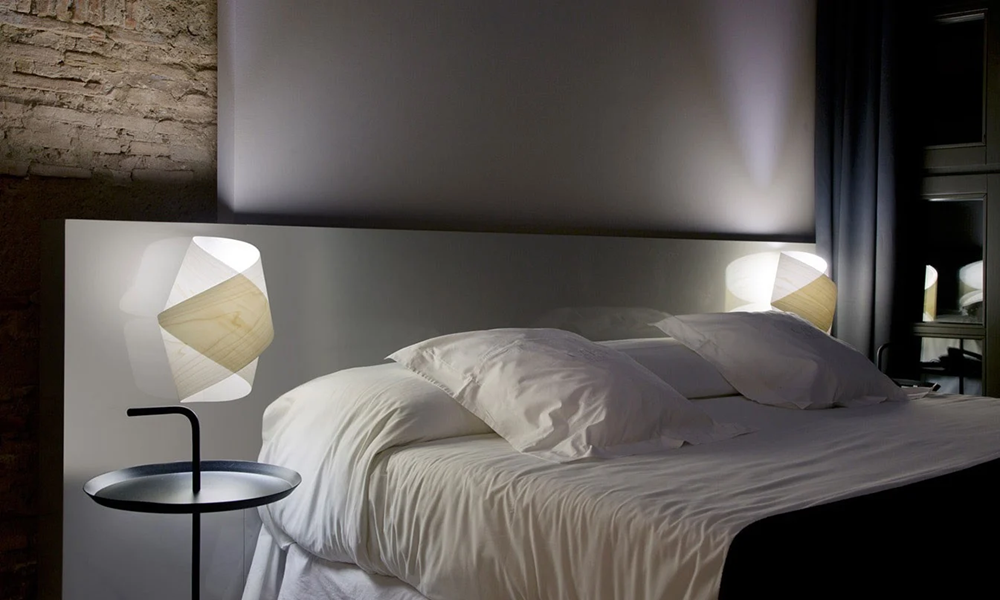
Lighting controls can dramatically change how a room feels throughout the day. Installing bedroom dimmers is one of the simplest ways to improve comfort and flexibility. The human sleep cycles (known as circadian rhythm) is closely connected to light exposure. Bright light in the morning helps signal the body that it’s time to wake up, while softer lighting in the evening supports relaxation. Without dimmers, the same fixture that helps you get dressed in the morning may feel far too intense during a quiet nighttime routine.
Dimmers also make it easier to control multiple layers of lighting at once. A softly dimmed ceiling fixture combined with bedside lamps can create a calm environment for reading or winding down. Smart dimmers add another level of control by allowing you to quickly and conveniently adjust brightness through voice commands, mobile apps, or automated schedules. Instead of installing separate fixtures for every possible lighting level, dimmers allow a single fixture to adapt throughout the day. That flexibility is why lighting designers consider them essential in modern bedroom environments.
Even the best fixtures can feel imbalanced and misplaced if they’re installed in the wrong location. Thoughtful placement helps lighting feel balanced while avoiding glare or uneven brightness.
Here are a few practical guidelines that designers often follow:
The unique size and architecture of a bedroom influence how lighting should be arranged. Larger rooms often require additional layers to maintain balance, while smaller spaces benefit from fixtures that maximize brightness without crowding the ceiling or walls.
Here’s how lighting strategies can adapt to different bedroom dimensions:
Compact bedrooms typically benefit from streamlined fixtures that conserve both space and visual simplicity. In rooms under 120 square feet, flush mount ceiling lights are often the most practical ambient option because they provide wide illumination without lowering the perceived ceiling height. Wall-mounted reading lights can replace table lamps to free up valuable nightstand space, while mirrors and lighter wall colors help reflect available light throughout the room. Keeping the lighting plan simple is often the most effective approach in smaller bedrooms. Combining a single ceiling fixture with focused bedside lighting usually provides enough flexibility for everyday routines.
Spacious bedrooms often require multiple light sources to avoid dim corners and uneven brightness. In rooms above 200 square feet, chandeliers or larger semi-flush fixtures can provide the main ambient lighting while bedside lamps and accent lighting add balance throughout the space. Seating areas, reading nooks, or dressing areas may also benefit from dedicated task lighting. Because large bedrooms often serve multiple purposes, layered lighting is especially important. Multiple fixtures help define different zones while maintaining a cohesive overall design.
Rooms with vaulted or cathedral ceilings come with additional lighting considerations. Standard ceiling fixtures may hang too high to distribute light effectively, which can leave the lower parts of the room feeling dim. In these spaces, pendant lights, larger chandeliers, or multiple recessed fixtures can help direct light downward. Pairing overhead fixtures with wall sconces or bedside lamps ensures that the lower portion of the room remains comfortably illuminated. Using dimmers is especially useful in vaulted bedrooms because high-mounted fixtures can otherwise produce excessive brightness.

Even carefully designed bedrooms can suffer from lighting problems when certain details are overlooked. Many of these issues are easy to avoid once you understand how layered lighting works.
Common bedroom lighting mistakes include:
Each of these issues can disrupt the comfort and functionality of a bedroom. By layering ambient, task, and accent lighting while following practical placement guidelines, it’s much easier to create a space that feels balanced and welcoming.
If you’re ready for a bedroom lighting update, exploring the bedroom lighting collection at Lightopia can help you compare fixtures that work together within a layered lighting plan.
Most bedrooms benefit from warm light in the 2700K to 3000K range. This color temperature produces a soft, warm tone that feels comfortable and relaxing. Cooler temperatures are sometimes used in kitchens or offices, but golden light typically works better for spaces designed for rest and relaxation.
At minimum, a bedroom should include two lighting layers: ambient lighting and task lighting. Adding accent lighting creates even more flexibility and depth with a third layer. Combining these layers allows the room to shift easily between bright morning routines and softer evening relaxation.
Recessed lights can work well in bedrooms, as long as they’re installed thoughtfully. Pairing them with dimmers allows the brightness to be adjusted throughout the day. They’re most effective when combined with bedside lamps or sconces for a lighting plan that includes both general and focused illumination.
Not always. In some bedrooms, overhead lights look best when the main fixture is centered in the room, while others benefit from placement aligned with the bed. The best approach depends on ceiling height, furniture layout, and whether additional lighting layers are present throughout the space.

THANK YOU!
Your discount code is on its way.
If you don't receive your promo code, please check your email junk or spam folder and click on "Not spam".
Free Shipping
Free standard shipping on all orders within the contiguous USA.
Orders to Canada, Alaska, Hawaii and Puerto Rico will incur additional shipping and handling fees, which will be calculated and presented at checkout. Canadian customers will be charged for all applicable customs duties, taxes, and brokerage fees.
For large, oversize items that require a surcharge above our shipping and freight partners’ standard shipping rates, an Oversize Processing Fee will be calculated in cart.